
What does scythe mean?
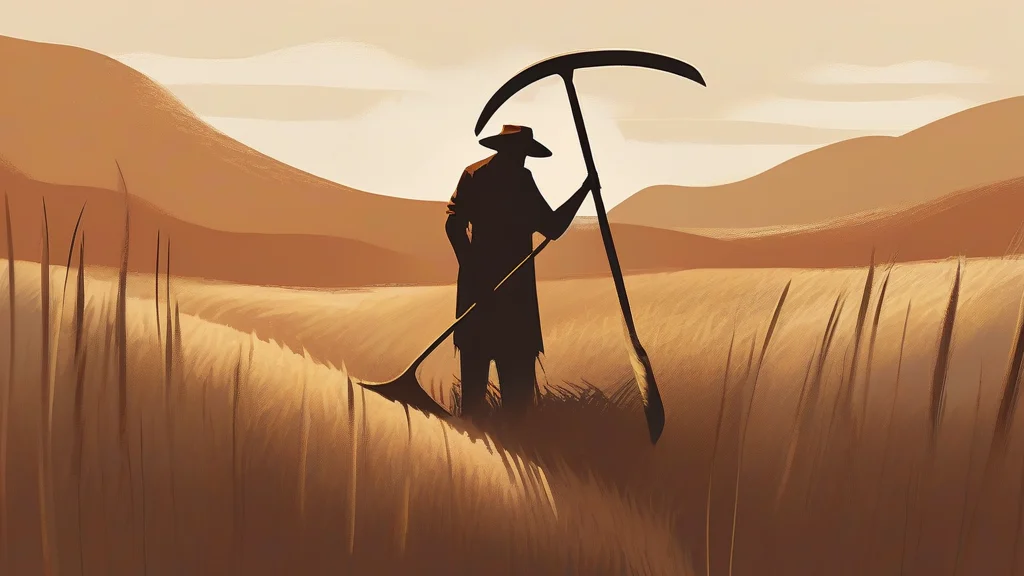
A scythe is a traditional harvesting tool with a long handle and a curved blade, designed for cutting grass, hay, or grain. It is swung in broad, rhythmic strokes, traditionally by one person using both hands, and preceded mechanized mowing equipment in many farming traditions. The word can also function as a verb: to scythe a crop means to cut it with this tool, while figurative uses describe removing people, obstacles, or institutions with swift and sweeping force. Although a sickle is sometimes substituted informally in casual descriptions, the distinction matters: a sickle is smaller, has a short handle, and is generally used with one hand, whereas a scythe is longer and suited to cutting larger areas. Today, the word most often evokes traditional rural labor, but its forceful figurative sense remains vivid in literature and political commentary.
A traditional agricultural tool with a long handle and a curved blade, used for cutting grass, grain, or other crops.
"The harvesters sharpened their scythes before entering the field."
A scythe is generally larger than a sickle and is operated with both hands.
To cut grass, grain, or another crop with a scythe; figuratively, to remove or destroy something with sweeping force.
"Workers scythed the tall grass beside the river."
The literal verb is uncommon in modern everyday use. Figurative uses are more frequent and often convey rapid, comprehensive removal.
The plural is formed by adding -s.
"Several old scythes hung on hooks inside the barn."
Before motorized mowers, a skilled laborer could cut acres of grain with the rhythmic swing of a scythe.
Reviewed by Deb Chak, Editor. AI-assisted content curated by RJS Tech Solutions LLP.
Where does scythe come from?
The word descends from Old English sīthe, an Old English term for a cutting tool used in agriculture. Its modern form developed through Middle English usage and ultimately reflects a Germanic root associated with cutting. It is related in its Germanic ancestry to sickle, although the two implements differ considerably in size and handling.
Related word forms
How scythe is actually used
The verb is relatively uncommon today and often has a literary or figurative tone. In figurative use, it implies rapid, sweeping removal rather than careful or selective cutting.
Easily confused with scythe
A scythe has a long handle and is worked with both hands, whereas a sickle has a short handle and is held in one hand.