
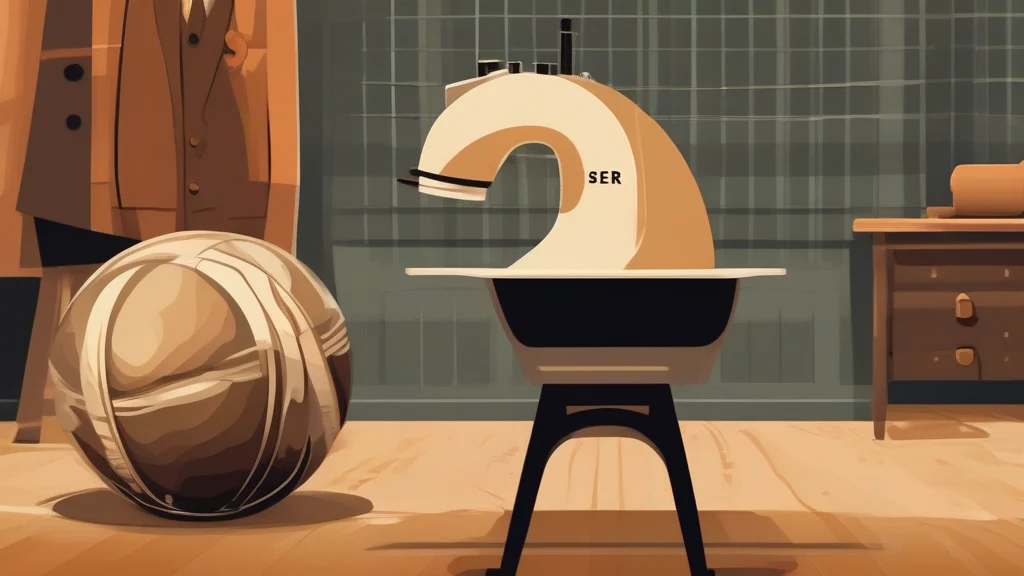
What does seamer mean?
A seamer is, quite literally, someone or something that makes a seam: a worker who stitches together the edges of fabric, leather, or other materials, or a machine designed to perform that task. The word also has a well-established role in baseball, where it refers to a fastball thrown with powerful spin. As the ball travels toward the batter, its seams grip the air and cause it to move or break sharply, often late in its path. This spin-generated movement can make the pitch much harder to hit than a straight fastball, although a seamer is not the only kind of hard pitch. In everyday language, the word most often suggests skilled manual work or specialized industrial equipment. In baseball writing and conversation, however, it evokes speed, movement, and the ability to challenge a hitter with a well-controlled delivery.
nounA seamer is a person or machine that joins the edges of material by stitching them together. In baseball, it is a fastball thrown with hard spin so that it breaks sharply as it approaches the batter.
- A person whose work is sewing seams in clothing, fabric, leather, or similar materials.
- A device or machine used to join the edges of materials by stitching.
- In baseball, a fastball delivered with hard spin so that it breaks sharply before reaching the batter.
"The tailor used a seamer to join the two pieces of fabric with a strong, straight stitch."
"The workshop employed several experienced seamers."
"He reached back and fired a seamer that diving into the corner."
The plural is used for multiple workers, machines, or baseball pitches.
"The two pitchers combined for several strikeouts with fastball seamers."
On the baseball diamond, a seamer is a fastball whose spinning seams make it dance late toward the plate.
Reviewed by Deb Chak, Editor. AI-assisted content curated by RJS Tech Solutions LLP.
Where does seamer come from?
The word was formed in English by adding the agent suffix -er to seam, meaning the line or joined edge produced by sewing. Seam itself has Germanic ancestry and ultimately derives from a Proto-Germanic term associated with a seam or a fastening. The later baseball sense developed from the importance of a ball's stitched seam: when a fastball spins rapidly, its seams act like small aerodynamic blades, causing the ball to deviate from a straight path.
How seamer is actually used
The general sewing sense is most common in manufacturing and tailoring contexts. The baseball sense is especially associated with North American baseball terminology.
Easily confused with seamer
A seamer joins edges by stitching, while a seamstress is specifically a woman employed to sew seams.