
What does segregation mean?
Segregation is the separation of people or things into different groups, especially when the division is enforced by law, institutions, or social custom. In public discussion, it most often refers to racial or ethnic separation, such as segregation in schools, housing, or employment, but the term can also describe religious, social, or geographic divisions. Segregation differs from discrimination: it concerns how groups are separated or organized, while discrimination concerns unequal treatment. It also differs from separation in general because it often implies a systematic pattern rather than an isolated circumstance. The word may appear in historical, political, legal, and social contexts, and it generally carries a critical tone when referring to enforced division. Understanding segregation helps reveal how laws, institutions, and spatial patterns can shape access to resources, opportunities, and participation in society.
nounThe practice or policy of separating people or things into distinct groups, often according to race, ethnicity, religion, gender, or social category. It can also refer to the state of being separated or set apart.
- The separation of people or groups from one another, especially when organized or enforced along racial, ethnic, religious, or social lines.
- The act of placing something in a separate group or category, or the condition of being isolated from others.
- The state of being separated or set apart from a larger whole.
"The city council debated a proposal aimed at reducing residential segregation."
"Historical laws enforced segregation in schools, housing, and public transportation."
"The study examined how segregation affects access to employment and education."
The plural is used for different instances or forms of segregation.
"The researchers compared different forms of urban segregation."
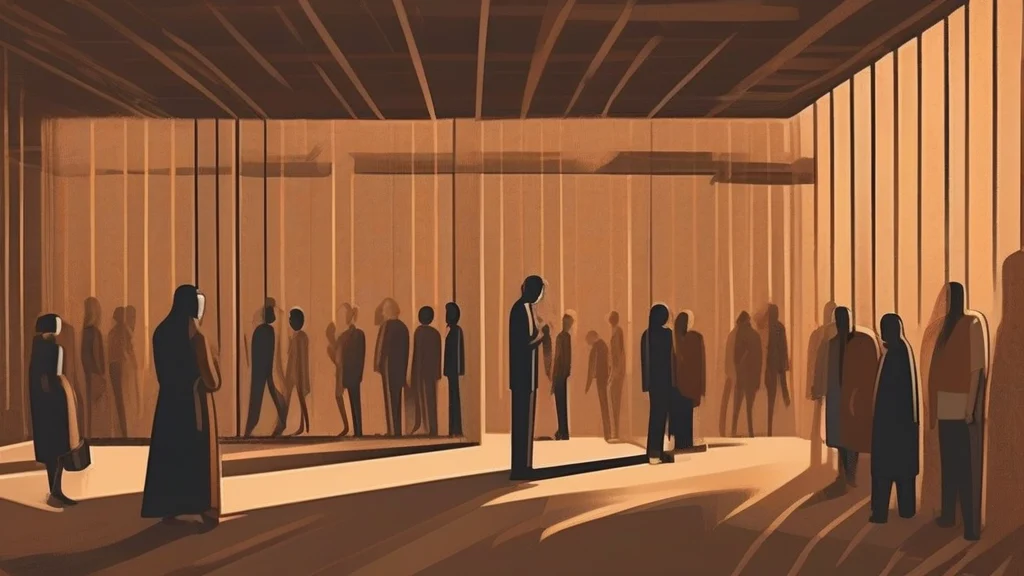
Segregation is more than a line on a map: it is the system that decides who lives, learns, and belongs beside whom.
Reviewed by Deb Chak, Editor. AI-assisted content curated by RJS Tech Solutions LLP.
Where does segregation come from?
The word comes from Latin segregare, meaning “to separate from a flock” or “to set apart,” with the noun segregation formed from the Latin stem segregat-. English borrowed the term in the early 19th century, initially in contexts involving separation or classification. Its modern association with institutionalized racial division became especially prominent in the 20th century, although the underlying English sense of separating groups is older and broader.
Related word forms
How segregation is actually used
The word is commonly used in political, legal, historical, and social contexts. It often carries a strongly critical connotation when describing institutionalized separation, though it can also be used neutrally for a broader process of division or isolation.
Easily confused with segregation
Segregation usually implies the deliberate or institutional separation of groups, while separation can refer to any instance of being apart.
Segregation concerns the physical or organizational separation of groups, whereas discrimination concerns unequal treatment or denial of opportunities.