
What does semolina mean?
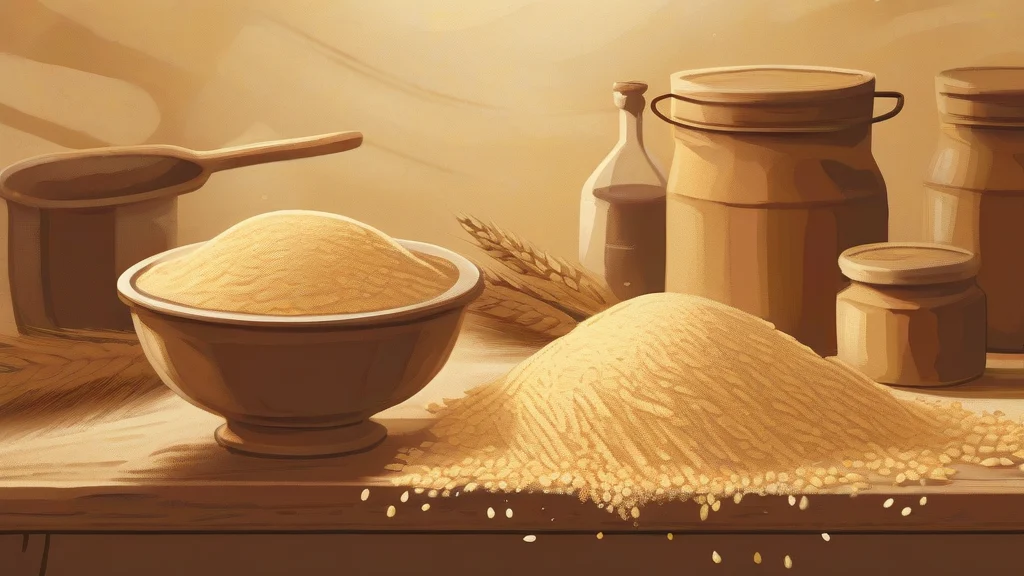
Semolina is a yellow, coarse-grained flour made from durum wheat, a hard variety of wheat that produces particularly resilient dough. Its gluten strength makes it especially suitable for pasta, including spaghetti, macaroni, and lasagna, as well as for some breads and pastries. Semolina can also name a simple milk-based pudding set with the flour and served with fruit, spices, or other toppings. The word is common in British and American kitchens, though suji is more familiar in much of South Asia. In recipes, semolina describes the ingredient itself rather than the finished dish: “semolina pasta” means pasta made from semolina flour, while “semolina pudding” means a dessert prepared with it. Although the flour is visually similar to ordinary wheat flour, its coarser grain and durable gluten give it a distinctive role in cookery.
A coarse-grained flour made from durum wheat and used especially in pasta and certain breads and pastries.
"She brushed the semolina lightly over the pasta shells to prevent them from sticking together."
Usually uncountable.
A light milk-based pudding or custard made with semolina.
"The chilled semolina set quickly in the refrigerator."
Usually uncountable when referring to the flour; the plural form is uncommon.
"The shop stocks several varieties of semolinas from different producers."
The pasta behind spaghetti and lasagna begins with golden durum-wheat semolina.
Reviewed by Deb Chak, Editor. AI-assisted content curated by RJS Tech Solutions LLP.
Where does semolina come from?
The English word comes from Italian semolina, the diminutive of semola, meaning fine wheat flour or meal. Italian semola derives from Latin simula, an obsolete term associated with small grain or flour and related to farina. The related French word semoule was borrowed from Italian and refers to the coarse flour or granular pasta product used in North African cooking.
How semolina is actually used
Semolina is usually an uncountable noun when referring to the flour. The culinary term is familiar in British and American English; in South Asian English, the related term suji is also widely used.
Easily confused with semolina
Semolina is finely or coarsely ground durum-wheat flour, whereas couscous consists of small granules made from durum-wheat semolina.