
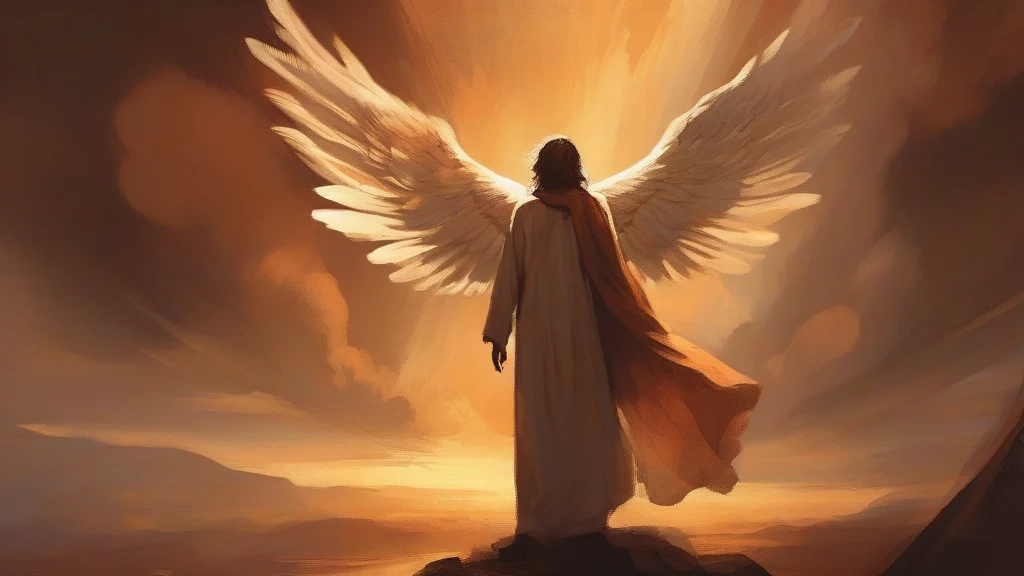
What does seraph mean?
A seraph is a celestial being associated in Jewish, Christian, and Islamic traditions with heavenly radiance, fire, and profound closeness to God. In Christian angelology, seraphs are traditionally ranked among the highest orders of angels and are commonly represented as having six wings. The word comes through Greek from a Hebrew plural term commonly interpreted as “burning ones,” reflecting their association with fire and intense divine light. Although the ordinary singular is seraph, seraphim is a traditional plural form that is also widely used to refer collectively to these beings. In secular writing, a seraph may describe someone or something exceptionally beautiful, pure, or enthusiastically radiant. Because the expression carries strong religious and poetic associations, it is more common in formal, literary, or devotional contexts than in everyday speech.
An angel or celestial being, especially one of the highest orders in traditional angelology.
"The vision showed a seraph standing before the throne of heaven."
The singular is standard in English, although seraphim is also established as a plural.
A person or figure portrayed as exceptionally beautiful, virtuous, or radiant.
"The young dancer moved across the stage like a seraph."
This is a poetic or figurative use and is usually found in elevated or literary language.
Seraphs is the regular English plural. Seraphim is a traditional plural borrowed directly from the underlying Hebrew form and is also used collectively for the angelic order.
"The choir of seraphs filled the vaulted church with song, while the angels were depicted as a choir of seraphim."
A seraph is often imagined with six wings: three cover the face, three cover the feet, and two are used for flight.
Reviewed by Deb Chak, Editor. AI-assisted content curated by RJS Tech Solutions LLP.
Where does seraph come from?
The English word entered through Greek seraph, ultimately derived from Hebrew seraphim, a plural term commonly interpreted as “burning ones.” Greek tradition singularized this form to seraph, while English retained both seraph and the plural seraphim. The Hebrew form is associated in the Book of Isaiah with six-winged heavenly beings who proclaim God's holiness.
Related word forms
How seraph is actually used
The word is chiefly religious or poetic. In modern secular use, it is usually figurative and may sound elevated, dramatic, or occasionally old-fashioned.
Easily confused with seraph
A seraph is the singular form, while seraphim is a traditional plural form and can also refer collectively to that group of celestial beings.
A seraph is traditionally associated with fiery radiance and highest angelic orders, whereas a cherub is generally portrayed as a childlike or innocent angel.