
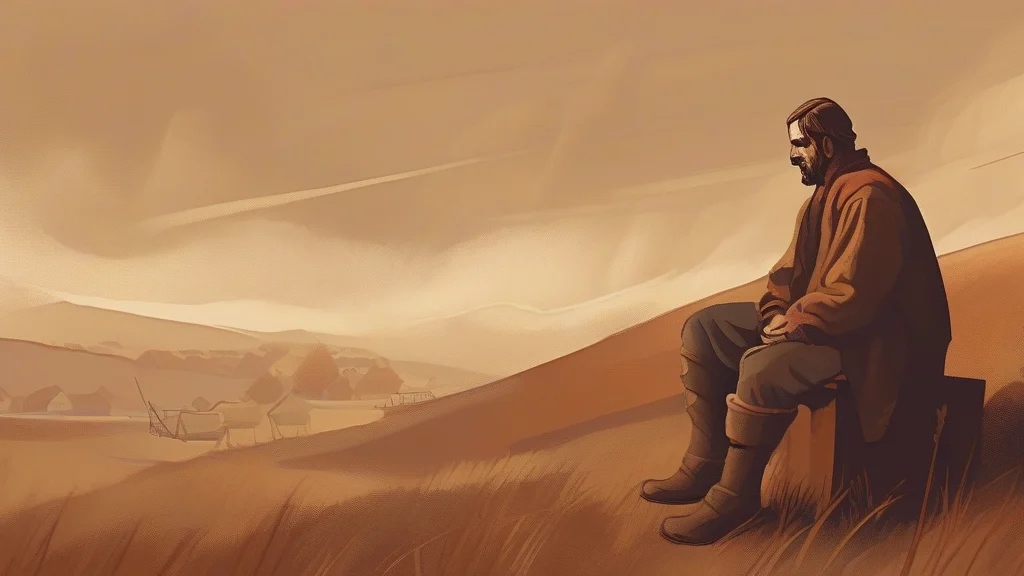
What does serf mean?
A serf was a person, usually an agricultural labourer or peasant, who was legally obliged to work on land controlled by someone else. The arrangement is especially associated with feudal Europe and with the systems of land ownership formerly common in Russia and other parts of Eastern Europe. Unlike an ordinary farm labourer, a serf was bound to the land or estate and owed compulsory service to a landowner; unlike many slaves, a serf could retain certain personal rights and sometimes own property. The word survives in modern English mainly as a forceful figurative criticism. Calling someone a “modern serf” suggests that they are trapped in exploitative, dependent labour and lack meaningful freedom. It is therefore more rhetorical and accusatory than a neutral social-science label, but it remains useful for discussing the historical relationship between land, labour, and political power.
nounA serf was a person, especially a peasant, who was legally bound to work on land belonging to a landowner, particularly under feudal or pre-modern systems. Today the word is also used figuratively to describe someone compelled to serve another person or power.
- Historically, a peasant legally bound to work on a landowner’s estate, especially under feudalism or in the Russian and other Eastern European systems.
- Figuratively, a person forced into subordinate or servile labour, or one who appears to be at the mercy of another power.
"The serfs cultivated the estate under the authority of the landowner."
"Local records describe how the serfs were obliged to work the land for the manor."
"The novel portrays the factory workers as modern serfs at the mercy of their employers."
The regular plural is used for individual people bound under a serf system; in modern figurative use, it often implies a group subjected to exploitation.
"The serfs protested the harsh conditions imposed by the estate."
“Serf” preserves the history of land, labour, and power in a single word: before wages became the norm, many people owed compulsory labour to those who owned the land.
Reviewed by Deb Chak, Editor. AI-assisted content curated by RJS Tech Solutions LLP.
Where does serf come from?
The English word comes through French from the Latin noun servus, meaning a servant or slave. In medieval Europe, it developed into a legal term for a person bound to serve land or a landowner, and it was also widely used for the dependent agricultural populations of Russia and Eastern Europe. The same Latin root underlies related English words such as servant, service, servitude, and servile.
Related word forms
How serf is actually used
In historical contexts, the term is precise and regionally associated with systems of land tenure. In modern figurative use, it is strongly evaluative and usually suggests domination or the loss of meaningful independence.
Easily confused with serf
A servant was someone employed to perform services, whereas a serf was specifically a person legally or economically bound to an estate or landowner.
A slave was generally regarded as property, while a serf was usually a legally constrained peasant who retained some personal rights.