
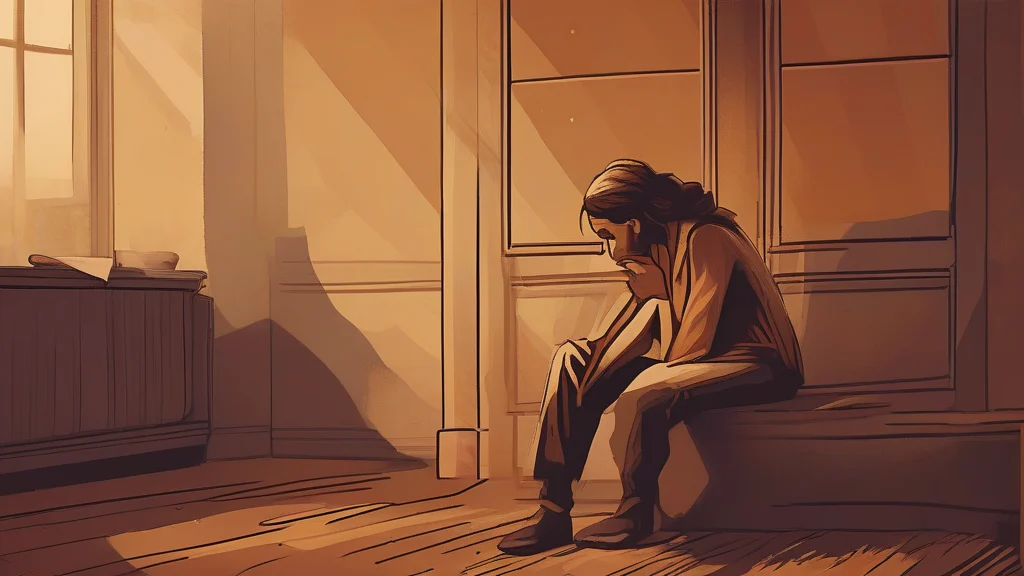
What does shamefacedness mean?
Shamefacedness is the state of feeling ashamed or embarrassed in a way that may become apparent to others through one's expression, posture, or manner. It describes both the inward feeling and the bashful or self-conscious behavior associated with it. The word often appears in formal or literary prose, where it conveys a visible awareness of having done something improper, unfortunate, or socially awkward. It is more emotionally charged than embarrassment alone and more specific than timidity: the emphasis is on shame rather than general social unease. A person displaying shamefacedness may avoid eye contact, lower their gaze, hesitate in speech, or otherwise appear uncomfortable. Although less common in everyday conversation than embarrassment or awkwardness, shamefacedness is useful for describing the distinctive combination of embarrassment and shame that makes someone's demeanor self-evident.
nounThe feeling of shame or embarrassment, especially as it is expressed in one's bearing or facial expression. It may also refer to an awkward, self-conscious manner caused by shame.
- The feeling or state of being ashamed and embarrassed, especially when outwardly apparent.
- An awkward, self-conscious manner or expression associated with shame.
"She met his gaze with the unmistakable shamefacedness of someone who knew she had been wrong."
"He tried to hide his shamefacedness behind a casual smile."
"The witness's shamefacedness made the judge's decision seem unexpectedly severe."
The plural is grammatically regular but rarely used, because the word is normally encountered in the singular.
"The novel explores the different shamefacednesses its characters experience in public."
Shamefacedness names the moment when embarrassment becomes visible before a word is spoken.
Reviewed by Deb Chak, Editor. AI-assisted content curated by RJS Tech Solutions LLP.
Where does shamefacedness come from?
The word is an English formation built from shame and the suffix -ness. Its older adjectival relative shamefaced was originally hyphenated and meant embarrassed or bashful; faced originally conveyed the idea of showing or presenting one's face and thus displaying a state. The noun shamefacedness developed from this adjective by adding the modern suffix -ness, which forms an abstract noun denoting a quality, state, or condition.
Related word forms
How shamefacedness is actually used
Relatively uncommon and somewhat formal or literary. The term is more evocative than a simple reference to embarrassment because it emphasizes shame and its visible effect on a person's expression or conduct.