
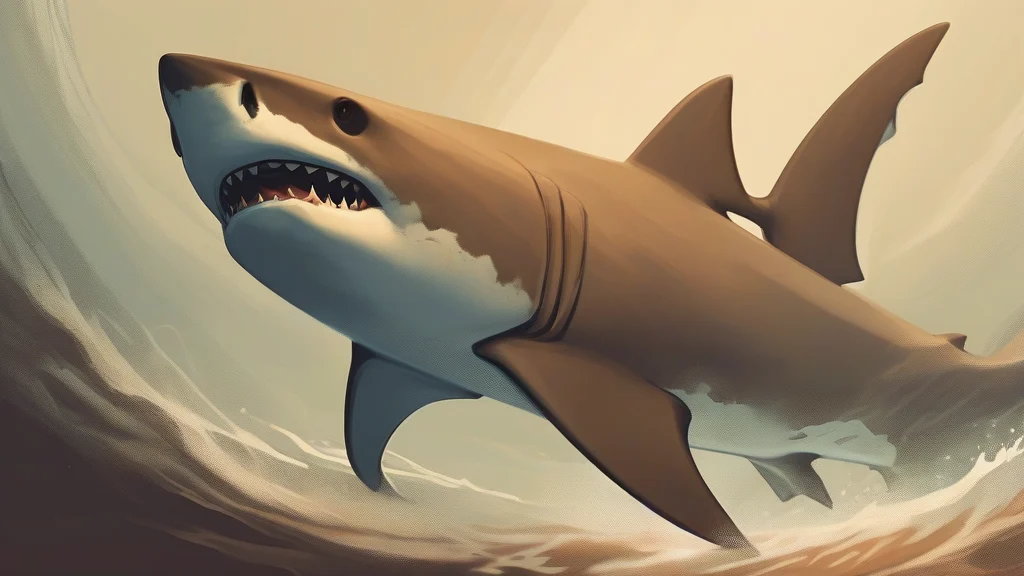
What does sharklike mean?
Sharklike is an adjective meaning resembling a shark. It can describe an animal, vessel, movement, or person whose form or behavior suggests a shark: streamlined, swift, predatory, intimidating, or relentless. The comparison is especially effective for things that move smoothly and powerfully, and it is also commonly used to portray someone as cold or dangerously calculating. Although the word may sound like an ordinary compound formed from “shark” and “like,” it is more literary and expressive than a neutral anatomical description. In a sentence, “sharklike” adds an image of danger and efficiency, making it especially suitable for creative writing, reporting, and vivid commentary.
adjectiveResembling a shark in appearance, movement, or manner. The term is often used to describe something streamlined, predatory, or sharply toothed.
- Resembling a shark in appearance, movement, or behavior.
"The fish had a sleek, sharklike body that glided through the water."
"The predator moved with a sharklike grace through the reef."
"The novel's villain was portrayed as cold and sharklike."
Sharklike captures the unmistakable impression of something sleek, predatory, and built for speed underwater.
Reviewed by Deb Chak, Editor. AI-assisted content curated by RJS Tech Solutions LLP.
Where does sharklike come from?
The word is formed in English by combining “shark” with the suffix-like element “-like.” It follows the productive pattern in which “-like” means “resembling” or “characteristically similar to.” Its meaning therefore develops from the established English name and familiar image of a shark rather than from a separate inherited root.
How sharklike is actually used
This is a literary or descriptive adjective rather than a common everyday term. It can be approving when describing streamlined movement, but it often conveys menace, ruthlessness, or predatory behavior.