
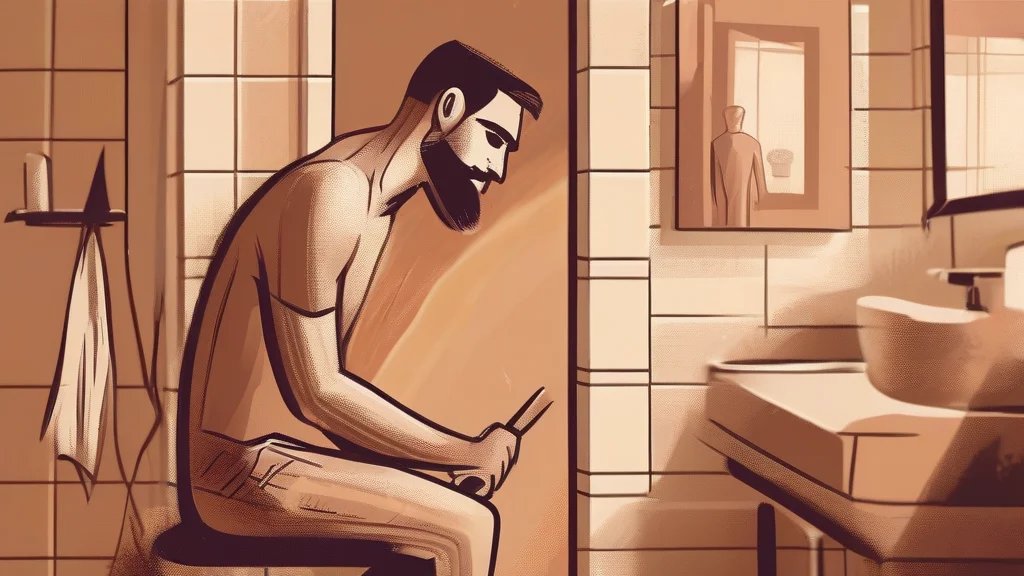
What does shave mean?
To shave is primarily to remove hair from the skin using a razor, as when someone shaves before work or smooths a face after shaving. The word also describes removing a thin layer from wood, metal, or another material with a sharp tool, and, in more abstract contexts, reducing an amount slightly by taking off a small part. As a noun, a shave can be the act of removing hair, a thin scraped-off layer, or a narrowly won outcome, especially in the phrase a close shave. Shave is straightforward and familiar in everyday British and American English, but its various applications connect personal grooming with careful subtractive work and modest adjustment.
To remove hair from the skin with a razor, or to scrape or remove a thin layer from a surface.
"He shaved his head before starting his new job."
In British and American English, shaving most commonly refers to removing facial hair with a razor.
An act of shaving; a thin layer removed by scraping; or a narrowly won result or narrow escape.
"The carpenter gave the wood a final shave before cutting it."
The phrase a close shave refers to a narrow escape or a closely won contest.
The plural is used for separate acts of shaving or, in some contexts, thin layers removed by scraping.
"The barber recommended two shaves a week for sensitive skin."
The word shave can describe both grooming and subtractive craft: a person may shave a face, while a carpenter shaves a thin layer from wood.
Reviewed by Deb Chak, Editor. AI-assisted content curated by RJS Tech Solutions LLP.
Where does shave come from?
The English verb descends from Old English sceafan, meaning to shave or scrape, and is related to the modern word shear. The noun developed in English for the act of shaving and for a shaving or thin layer. The word also has cognates in several Germanic languages, including Dutch schaven and German schaben, reflecting a widespread Germanic root associated with scraping or removing a surface layer.
Related word forms
How shave is actually used
The verb is common in both British and American English. In its grooming sense, it usually describes removing hair with a razor; for removing an animal's hair or fleece, shear is often more precise. The noun in the sense of a narrow escape is usually used in the expression a close shave.
Easily confused with shave
No distinction is needed; this is the headword itself.