
What does sheaf mean?
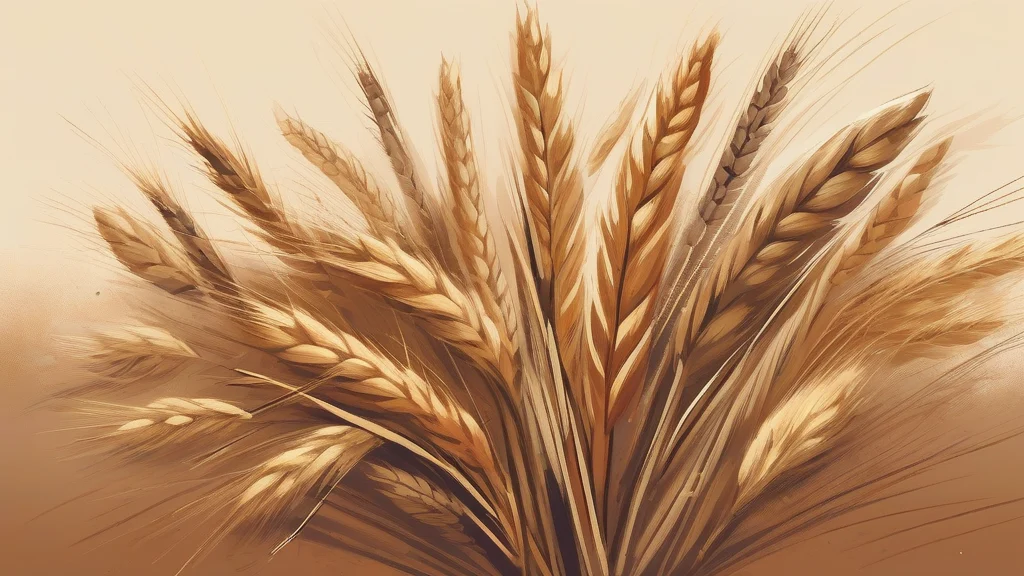
A sheaf is a bundle of cut stalks, especially wheat, barley, or another cereal, bound together so that they can be gathered, dried, or transported. The word also refers figuratively to a collection of papers, poems, or other materials gathered into one group. Its agricultural meaning is ordinary in rural vocabulary, while such extensions as “a sheaf of poems” have a distinctly literary tone. The metaphor is effective because a sheaf brings separate stalks together while preserving their recognizable individual shapes. Sheaf is also used for a concentrated mass of objects or information. In modern usage it is a countable noun, and its plural is “sheaves,” pronounced with the same vowel as the singular but with a final /vz/ sound.
A bundle of cut stalks of grain or another plant, tied together; also, figuratively, a collection of papers, poems, or similar items.
"The workers carried a heavy sheaf of reeds toward the drying racks."
The agricultural sense is standard; literary and figurative senses are also common.
To gather or bind material into a bundle or sheaf.
"After the documents were sorted, she sheafed them into neat groups."
This verb is relatively uncommon and occurs chiefly in formal or literary contexts.
The plural is pronounced /ʃiːvz/. With “of,” it normally follows the standard singular noun pattern: “sheaves of wheat.”
"The barn was filled with sheaves of freshly harvested wheat."
From the field to the filing cabinet: “sheaf” began as a farmer’s bundle and became the literary word for a collection of poems.
Reviewed by Deb Chak, Editor. AI-assisted content curated by RJS Tech Solutions LLP.
Where does sheaf come from?
The word comes from Old English sceaf, meaning a bundle of stalks or grain, and is cognate with Dutch schoof and German Schefe. Its present English form developed through Middle English shef. From its original agricultural use, the word acquired the figurative sense of a collection of written or creative works.
Related word forms
How sheaf is actually used
The agricultural sense is standard, while the figurative senses are common in formal and literary contexts. As a noun, it is countable and normally takes “of” when its contents are specified.
Easily confused with sheaf
A sheaf is a bundle of stalks or papers, whereas a sheave is a grooved wheel used to run a cable or rope.