
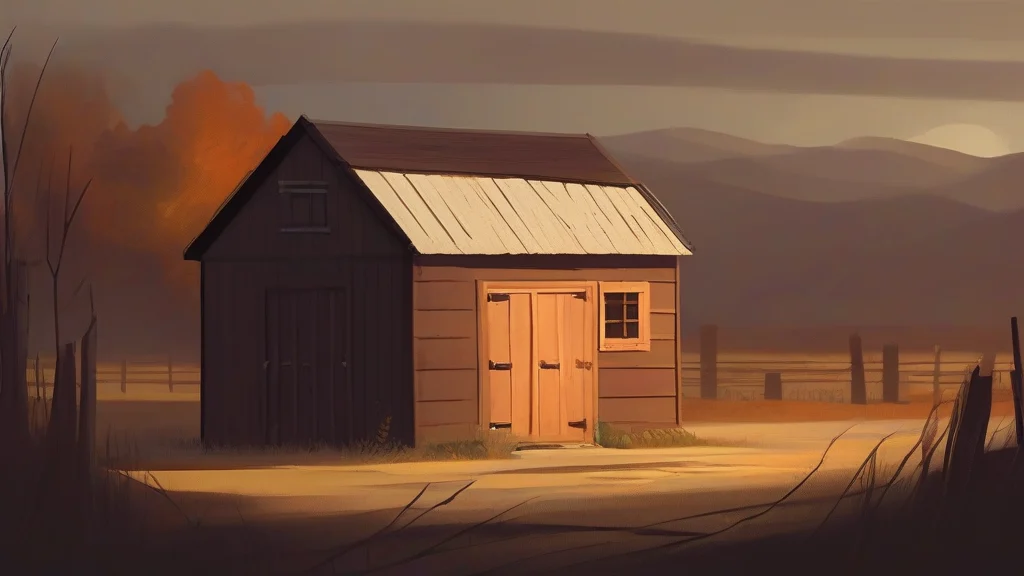
What does shed mean?
Shed is a versatile English word used as both a verb and a noun. As a verb, it most often describes the removal or release of something: a person sheds a coat, a tree sheds leaves, and a cloud sheds rain. It can also mean to give off a substance or quality, as in “shed tears” or “shed light,” and figuratively, to get rid of a burden such as fear, weight, or doubt. Some of its uses mean to separate or divide, reflecting the word’s historical sense of parting something into different elements. As a noun, a shed is a simple, usually detached building used for storage, repairs, gardening, or other practical purposes; the word is particularly associated with a garden shed in British English. Together, these meanings make shed useful in both literal and figurative language. It can describe physical processes, emotional release, the removal of obstacles, and the disclosure of information.
To remove or cast off something, give off or emit something, or separate something from another.
"The company is trying to shed unnecessary costs before the end of the year."
Often transitive, but it can also be used intransitively, especially when describing the loss of leaves, skin, hair, or an advantage.
A simple building or shelter used for storage, work, or keeping tools and equipment.
"He repaired the broken door of the shed over the weekend."
The noun is especially common in British English, as in “garden shed,” but is also widely used in American English.
The regular plural of the noun is “sheds,” as in “several old sheds beside the railway.”
"The allotments contain a row of wooden sheds."
One modest word covers everything from a tree dropping its leaves to a person giving up a burden and revealing what lies beneath.
Reviewed by Deb Chak, Editor. AI-assisted content curated by RJS Tech Solutions LLP.
Where does shed come from?
The verb descends from Old English scēdan, meaning “to separate, divide,” through Middle English forms such as scheden and sheden, and ultimately from Proto-Germanic *skēdaną. It has close cognates in German scheiden, Dutch schieden, and Swedish skeda, all associated with separating or dividing. The noun developed in Middle English from the idea of a place where something could be cast off or deposited and later came to denote a simple outbuilding or shelter.
Related word forms
How shed is actually used
The verb is common in both formal and informal English. In figurative combinations such as “shed light,” “shed doubt,” and “shed tears,” it means to reveal, remove, or release. The noun is especially familiar in British usage, although “shed” is also widely understood in American English.
Easily confused with shed
Shed is pronounced like “shead,” whereas shied, the past tense of shy, is pronounced “shied” and may rhyme with “freed.”