
What does sheeter mean?
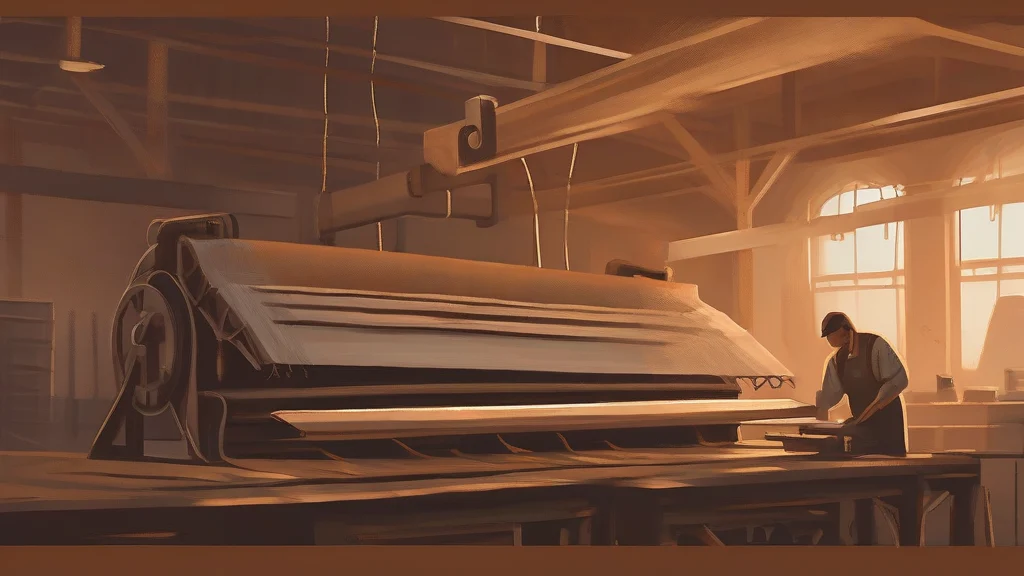
Sheeter is an uncommon noun denoting a person or device that handles or processes material in sheets. Its clearest historical application is to a worker who dealt with sheets of paper in printing, bookbinding, or a related trade, either sorting, pressing, stacking, or passing them along for further work. The word is also used more broadly for machinery that performs some form of sheeting operation. Its modern use is rare, and it survives mainly in older occupational terminology and trade references. In ordinary speech, “paper handler” or a more specific job title would normally be preferred because “sheeter” can sound intentionally coined or old-fashioned. Although the word is transparent when compared with “sheet,” it is useful in historical reading because it records a specialized division of labour in trades where individual sheets had to be handled with care.
A person whose work consists of handling or processing sheets of material, especially paper in printing or bookbinding.
"The sheeter gathered the loose pages and carried them to the press."
Dated and chiefly occupational; more specific terms are now usually preferred.
A machine or device used to process material in sheets.
"The material was fed into the sheeter before the final finishing process."
Technical and uncommon in general usage.
Used mainly when referring to several workers or devices of this kind.
"Two sheeters prepared the paper for the press."
Once, knowing who handled the sheets was a distinct job; today the occupation survives mostly in old trade references.
Reviewed by Deb Chak, Editor. AI-assisted content curated by RJS Tech Solutions LLP.
Where does sheeter come from?
The word is formed from “sheet” and the agentive suffix “-er,” meaning a person or thing that performs the action. “Sheet” comes from Old English scete, originally denoting a broad piece of cloth or material, and developed through the history of English to refer to thin, flat pieces of material, including paper. The occupational compound “sheeter” consequently developed within the vocabulary of trades concerned with paper and other flat materials.
Related word forms
How sheeter is actually used
This is a dated and chiefly occupational term. It is rarely encountered in contemporary general English and may refer more specifically to a paperworker in historical contexts.