
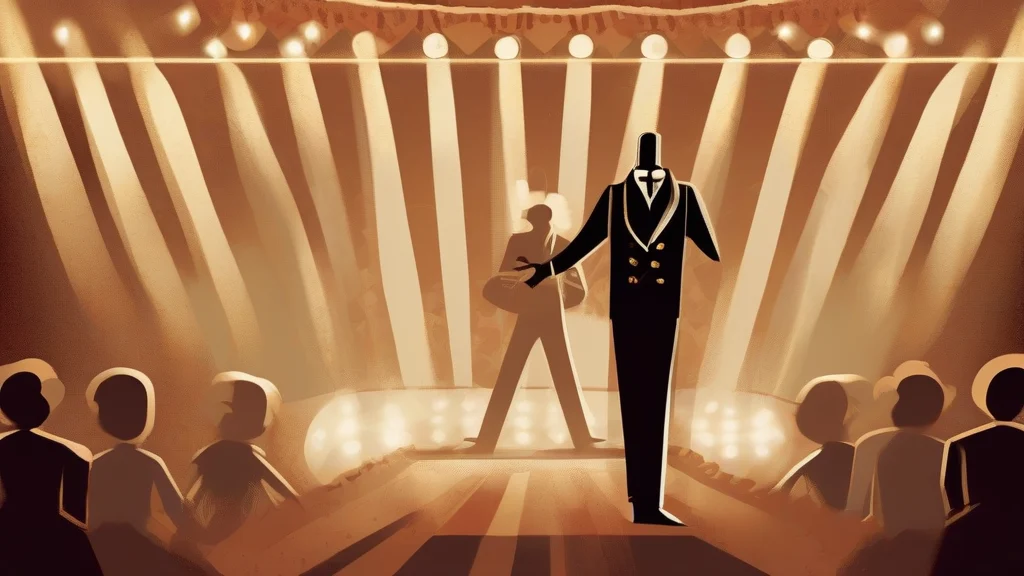
What does showmen mean?
Showmen is the plural of showman. Literally, it refers to men who perform, present, or manage public spectacles, especially circus and fair entertainments. In broader usage, it can describe men who are exceptionally skilled at publicity, dramatic self-presentation, or capturing public attention. This figurative sense may be complimentary, particularly when referring to someone with impressive organizational or promotional ability, but it can also carry a slightly skeptical or critical tone, suggesting that theatricality is being emphasized over substance. The word commonly appears in expressions such as “great showman” and “political showman.” It is standard in both British and American English, and the plural is formed by changing the ending of “showman” to “-en,” yielding “showmen.”
plural nounPlural of showman; men who display or perform shows, especially at circuses, fairs, or other entertainments. The term can also refer to men skilled at publicity, presentation, or dramatic self-promotion.
- Men who present or perform shows, especially at circuses, fairs, and public entertainments.
- Men regarded as skilled at publicity, theatrical presentation, or attracting attention through a striking personality.
"The showmen had already assembled their tents before the crowds arrived."
"The showmen directed the audience toward the main tent."
"Critics dismissed him as a political showman more interested in publicity than policy."
The standard plural of “showman,” used especially for circus or fair performers and, figuratively, for theatrical or publicity-conscious public figures.
"The showmen greeted the visitors with exaggerated gestures and comic routines."
From circus rings to political stages, showmen have long turned spectacle into public attention.
Reviewed by Deb Chak, Editor. AI-assisted content curated by RJS Tech Solutions LLP.
Where does showmen come from?
The word “showman” is formed in English from “show” and the suffix “-man.” Its early sense referred to a person who exhibited or performed in a public show, while the extended sense of a colorful or publicity-conscious public figure developed later. The word belongs to the same English etymological family as “show,” “showcase,” and “showpiece,” all of which are connected with displaying or presenting something to view.
Related word forms
How showmen is actually used
In its second sense, “showmen” can be approving when describing showmanship, but it is often mildly critical when applied to a public figure associated with flamboyance or self-promotion.
Easily confused with showmen
“Showman” is the singular form, while “showmen” is the plural.