
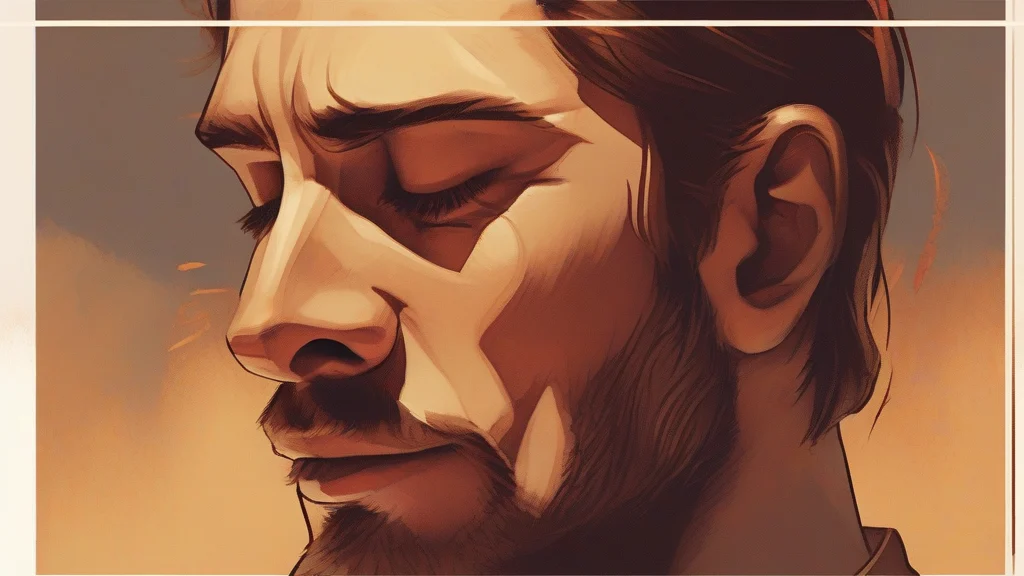
What does sideburn mean?
Sideburns are strips of hair growing along the sides of the face, immediately in front of the ears. The term is usually plural and describes either the facial hair collectively or the matching strip on each side. Sideburns have been an important feature of men's grooming and fashion for centuries, appearing in styles ranging from neat, short cuts to the broad, rounded whiskers associated with nineteenth-century military figures. In contemporary use, the word is chiefly associated with the United States, although British speakers also understand it and may use side whiskers as an alternative expression. Sideburns can be grown, trimmed, shaved, tapered, or styled, making them part of both deliberate grooming choices and everyday descriptions of a person's appearance. The term is also useful in discussions of historical fashion, caricature, and period films, where conspicuous sideburns often signal an older or deliberately exaggerated style.
noun (usually plural)Sideburns are strips of facial hair growing in front of the ears and extending down the sides of the face. The word is almost always plural, although a single strip may be called a sideburn.
- Facial hair growing in front of the ears and down the sides of the face.
"He trimmed his long sideburns before the interview."
"The barber carefully trimmed the edges of his sideburns."
"In the nineteenth century, prominent sideburns became a distinctive feature of many men's fashions."
The usual plural form, used collectively for facial hair on both sides of the face.
"She noticed that he had grown sideburns again."
Sideburns are one of the few everyday terms for facial hair that are almost always plural.
Reviewed by Deb Chak, Editor. AI-assisted content curated by RJS Tech Solutions LLP.
Where does sideburn come from?
The word is English and first appeared in the early nineteenth century. It developed as a compound of side and burn and was influenced by the earlier expression side-whiskers, which directly described whiskers at the sides of the face.
How sideburn is actually used
Although the singular form exists, it is rarely used in ordinary modern English. The usual plural sideburns may refer to the hair collectively or to the two strips separately.
Easily confused with sideburn
Sideburns are facial hair along the sides of the face, whereas mutton chops are broad, rounded side whiskers traditionally joined to a moustache.