
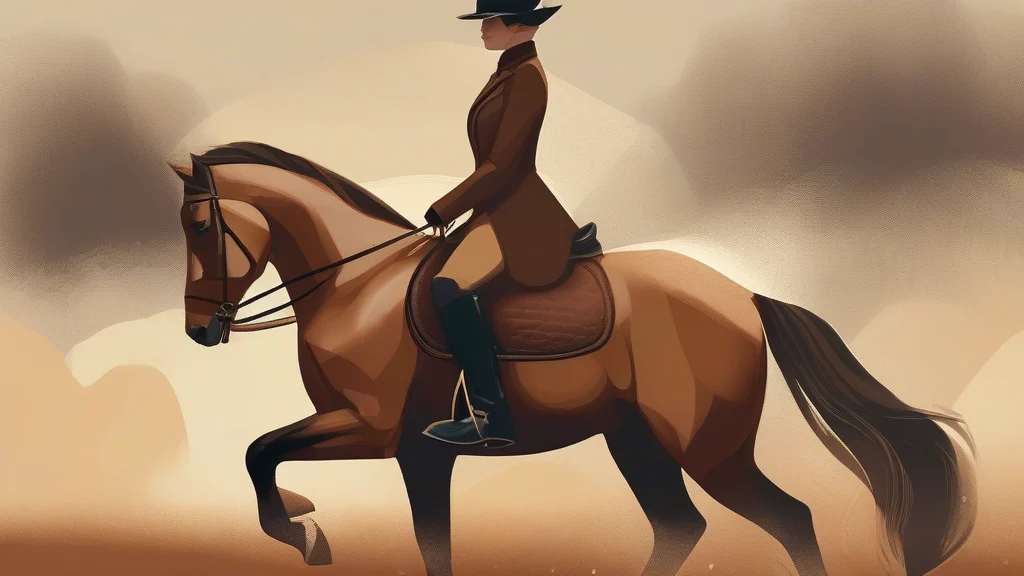
What does sidesaddle mean?
A sidesaddle is a type of saddle and riding position in which the rider sits with both legs on one side of the horse rather than astride. The word may denote the specially shaped saddle itself, the characteristic posture, or the act of riding in that posture. Sidesaddle riding is associated particularly with women riding in skirts, though anyone may use the position, and it remains common in equestrian sport, including disciplines such as sidesaddle jumping. Historically, the arrangement offered a practical way for women to ride while maintaining contemporary standards of dress and decorum. In modern usage, “ride sidesaddle” is the most familiar expression. The related adverb often appears in the phrase “ride sidesaddle,” while the verb has the inflected forms “side-saddled” and “side-saddling.”
A saddle arranged so that a rider may sit with both legs on one side of the horse; also the position of riding in this manner.
"The sidesaddle was fitted with a secure pommel and a single stirrup."
The sense for the riding position is especially common in the phrase “ride sidesaddle.”
To ride a horse with both legs on one side of its body.
"She side-saddled the pony and rode it around the field."
Usually written with a hyphen when inflected: “side-saddled” and “side-saddling.”
With the legs on one side of the horse rather than astride.
"The rider sat sidesaddle while controlling the horse with the reins."
Chiefly used in the established expression “ride sidesaddle.”
The plural is used for multiple examples of the saddle or riding position.
"The saddler displayed several sidesaddles for the historical pageant."
Before stirrups became standard, sidesaddle riding allowed women to travel on horseback while preserving conventions of dress.
Reviewed by Deb Chak, Editor. AI-assisted content curated by RJS Tech Solutions LLP.
Where does sidesaddle come from?
The word is a compound of “side” and “saddle,” referring to a saddle used with the rider's legs on one side. The compound has been in English use since the 17th century, and its development parallels the established practice of riding in this position. Its elements reflect the literal meaning of the earlier words rather than a more remote learned etymology.
Related word forms
How sidesaddle is actually used
The spelling is usually written as one word, although the hyphenated form “side-saddle” is also traditional and appears in attributive uses such as “side-saddle seat.” As an adverb, the word is commonly used after “ride.”