
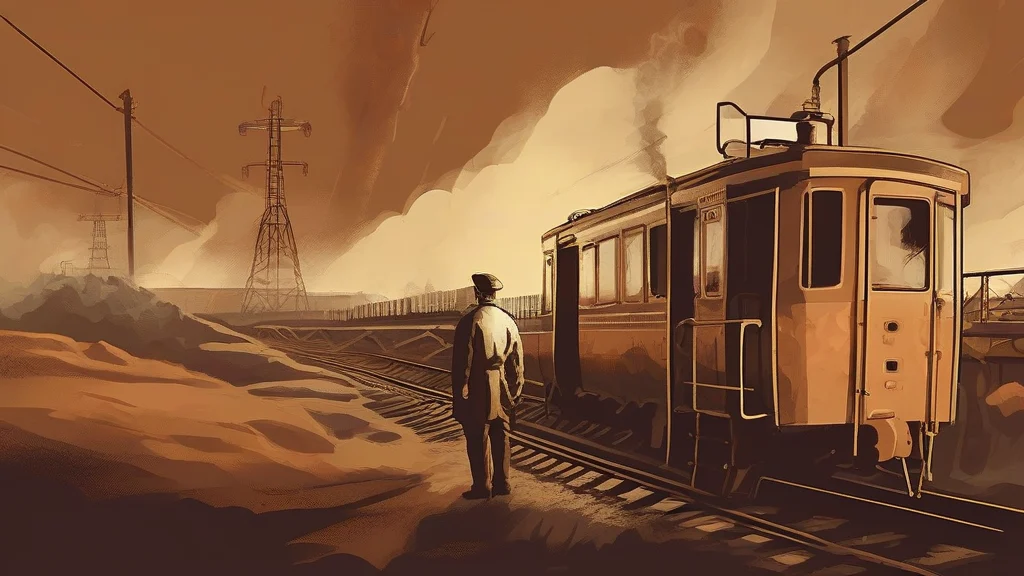
What does signalmen mean?
Signalmen are railway workers responsible for controlling signals and helping trains move safely through the railway network. In older railway systems, the role involved manually operating signal levers, lamps, or flags, communicating with train crews, and maintaining the equipment associated with signals. The word is the plural of signalman and is especially associated with British railway language, although similar usage existed in the United States. In modern contexts, signalmen may refer to workers in stations, junctions, or signal boxes, while historical accounts often use the term for employees who protected crossings and guided trains before electronic and automated signalling became widespread. The word is also more broadly evocative of the skilled human judgment required in railway operations: a signalman had to understand the movement of trains, the state of the line, and the consequences of a mistaken instruction. Its distinctive historical associations make it especially useful when discussing railway labour, old signalling practices, and the transition from manual to automated systems.
noun (plural)Signalmen are railway workers who control signals and oversee the safe movement of trains. The term can also refer historically to employees who tended signals or communicated with train crews.
- Railway workers who operate or oversee signals and coordinate train movements.
- Historically, employees who attended to railway signals, including maintaining or manually displaying them.
"The signalmen worked around the clock to keep the busy junction running safely."
"The signalmen used hand lamps and flags to guide trains through the station."
"Signalmen at the junction controlled the points and protected each train's route."
Signalmen is the standard plural of signalman.
"Experienced signalmen were responsible for protecting several busy sections of the line."
Before modern signalling technology, a signalman could be the last person standing between a moving train and disaster.
Reviewed by Deb Chak, Editor. AI-assisted content curated by RJS Tech Solutions LLP.
Etymology of signalmen
The word combines signal, from French signal and ultimately Latin signum, with man. The compound developed in the context of railways, where workers controlled signals and passed or enforced instructions related to train movements. Its related forms—including sign, signify, design, and insignia—ultimately trace to the Latin root signum, meaning a sign or mark.
Related word forms
How signalmen is actually used
Signalmen is a plural form and is normally used in railway or historical railway contexts. The singular is signalman. The term is somewhat old-fashioned in British English, where signaller is often preferred for the current job title, but it remains understandable in historical and specialized writing.
Easily confused with signalmen
A signaller is any person who gives signals, especially in transport or emergency services, whereas a signalman is specifically a railway worker associated with controlling signals.