
What does silkworm mean?
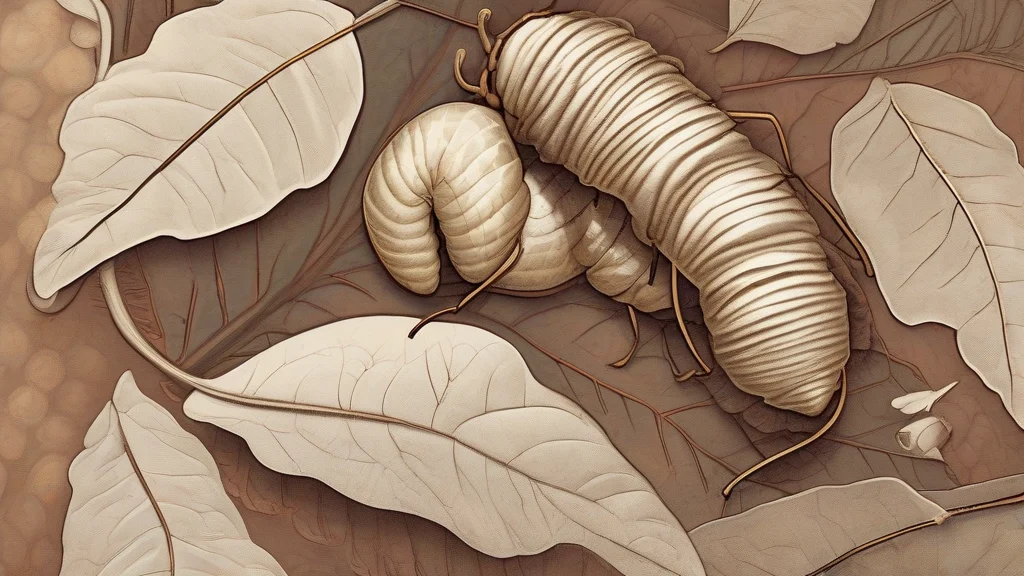
A silkworm is the caterpillar-like larva of the domesticated silk moth, a species cultivated worldwide for the valuable silk it produces. When mature, the larva spins a protective cocoon, drawing out a long, continuous filament that can be reeled and processed into silk thread. Sericulture, the raising of silkworms and the production of silk, is especially associated with China and later with Japan, Korea, India, and other regions. Although the domesticated silkworm is generally unable to survive outside human care, related wild silk-producing moth larvae remain part of forest ecosystems. The word is also closely connected with the history of sericulture, one of the world’s oldest forms of animal-assisted textile production.
nounA silkworm is the larva of the domesticated silk moth, Bombyx mori, raised for the silk it produces while forming its cocoon.
- The larva of the domesticated silk moth, Bombyx mori, cultivated for the silk it produces in its cocoon.
"The silkworms were fed mulberry leaves until they were ready to spin their cocoons."
"Silkworms spin cocoons in which they can be transformed into pupae."
"The history of silk production is closely tied to the cultivation of silkworms."
The standard plural is “silkworms.”
"The silkworms feed mainly on mulberry leaves."
Before its cocoon can be harvested, a silkworm spins a single continuous thread of raw silk more than 2,000 metres long.
Reviewed by Deb Chak, Editor. AI-assisted content curated by RJS Tech Solutions LLP.
Where does silkworm come from?
The compound silkworm combines the English word silk with worm. Silk ultimately comes through Old English from Latin sericum, referring to silk or a silk fabric, while worm comes from Old English wyrm, meaning a small crawling creature. The compound reflects the traditional practice of obtaining silk from the cocoons of these larvae; the exact first attestation is not necessary to understand its long-established agricultural meaning.
Related word forms
How silkworm is actually used
The term normally refers specifically to the larva of the domesticated silk moth. In general biological contexts, “silkworm” can also refer to larvae of other silk-producing moths, but the common agricultural meaning is the Bombyx mori larva.
Easily confused with silkworm
A silkworm is the larval stage of the silk moth, while a silk moth refers to the adult moth, especially the domesticated species raised for silk production.