
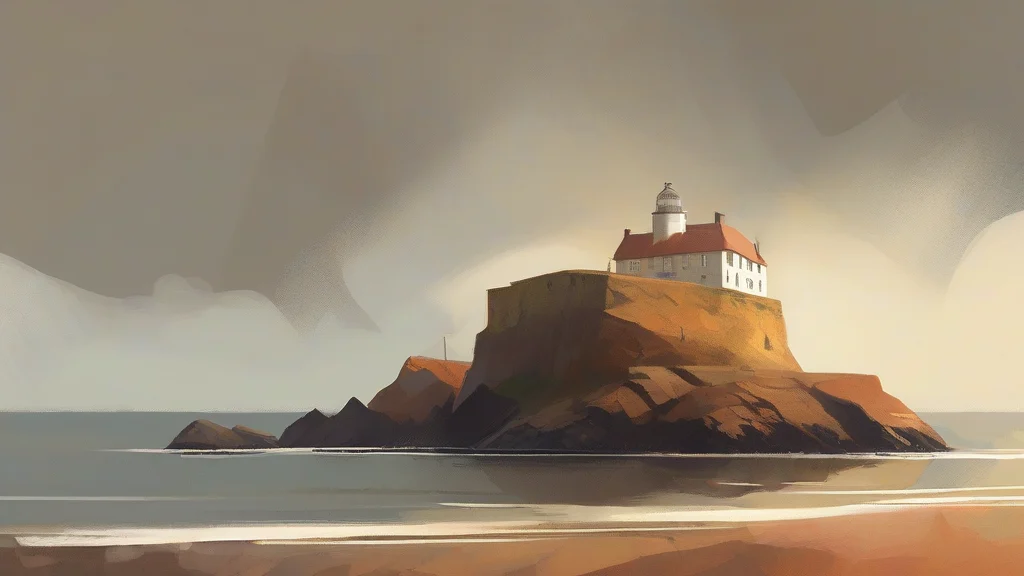
What does skerry mean?
A skerry is a small rocky island, especially one of the scattered rocky islets found off Scotland, Scandinavia, and other northern European coasts. Unlike a large island, a skerry may be little more than a low, rugged outcrop surrounded by sea, though some are substantial enough to support vegetation, wildlife, or occasional human activity. The word is especially familiar in Scottish coastal geography and also appears in descriptions of the northern Atlantic and Scandinavian seas. It can sound more evocative and geographically precise than "islet" or "rocky island," suggesting exposed, maritime scenery shaped by tides and storms. A skerry is therefore useful when discussing coastal topography, sailing routes, island groups, and the distinctive landscapes of northern seas.
nounA skerry is a small rocky island or an isolated group of rocks, especially in the sea. The term is especially common in Scottish and Scandinavian geographical usage.
- A small rocky island or isolated rocky islet, especially one in the sea.
"The boat navigated carefully through the skerries off the western coast."
"The skerry was visible only briefly between the waves."
"Their boat anchored beside a remote skerry where the seabirds gathered."
The plural is formed by adding -ies and is standard in both British and American English.
"The map marks several skerries between the mainland and the open sea."
A skerry is the kind of rocky speck that can make a coastal map look like scattered punctuation.
Reviewed by Deb Chak, Editor. AI-assisted content curated by RJS Tech Solutions LLP.
Where does skerry come from?
The word comes from Old Norse sker, meaning a reef or rocky shoal, and is related to the Scandinavian term skerja, associated with shearing or skimming. It developed in English through Scottish and northern maritime usage. The related English noun "sker" also reflects the same Old Norse source and preserves the older sense of a rocky reef or shoal.
How skerry is actually used
The word is chiefly associated with Scotland, Scandinavia, and the British Isles. It is more specialized than the general word "island" and often conveys a small, barren, or rocky landform.