
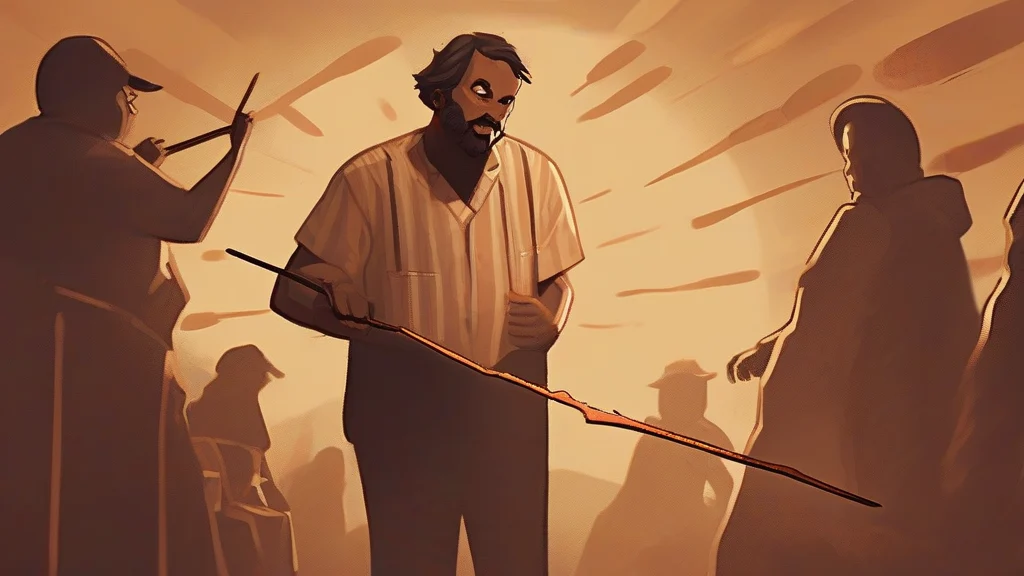
What does skewering mean?
“Skewering” means piercing or securing something on a skewer, a thin pointed stick often used to hold pieces of food together for grilling, roasting, or barbecuing. The word is especially common in descriptions of food preparation, as in a recipe that instructs the cook to begin by skewering the vegetables. It can also be used figuratively to describe questioning or criticism that is deliberately sharp and probing: a reporter may be said to be skewering a politician with difficult questions. In this figurative use, the image is of someone being pierced by pointed remarks. The word is readily understood in both British and American English and is more vivid than the plainer “piercing,” while its connection with cooking gives everyday sentences a concrete, culinary flavour.
To pierce or fasten something on a skewer or pointed rod, especially for cooking.
"She skewered the vegetables before putting them on the grill."
Also used figuratively for piercing criticism or pointed questioning.
The act of piercing or fastening something on a skewer.
"The skewering of the meat was quick and easy."
This nominal use is less common than the verb form.
A skewer turns vegetables into dinner on a stick—and, figuratively, turns pointed questions into an interrogation.
Reviewed by Deb Chak, Editor. AI-assisted content curated by RJS Tech Solutions LLP.
Where does skewering come from?
The base word “skewer” is a Middle English borrowing from Old Norse. Its older relatives refer to splitting or cleaving wood, reflecting the splinter-like shape and pointed end of a skewer. The verb developed both its familiar culinary sense and the later figurative sense of piercing someone with questions or criticism.
Related word forms
How skewering is actually used
The culinary sense is common in everyday and cooking contexts. The figurative sense is informal or journalistic and suggests sharp criticism or an intense, penetrating line of questioning.
Easily confused with skewering
Both involve piercing with a pointed object, but a skewer is generally a thin cooking stick, whereas a spear is a long weapon or hunting implement.