
What does slagheap mean?
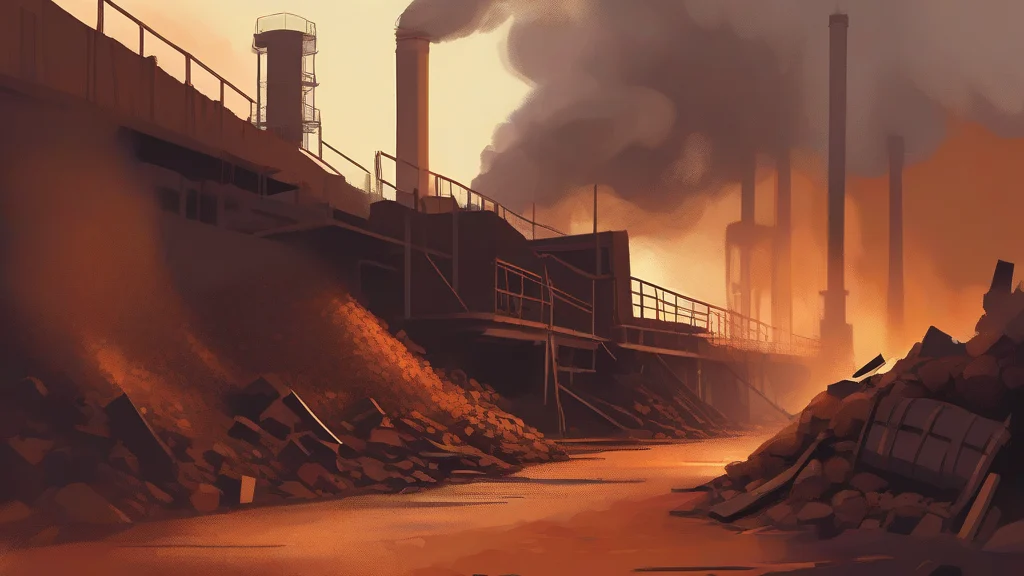
A slagheap is a large mound of waste material left after minerals are extracted or metals and other materials are processed. It may consist of coal waste, mineral tailings, glass, slag from metal smelting, or a mixture of industrial residues. Such heaps can be prominent features of former mining landscapes, often forming broad, steep-sided hills beside towns and industrial sites. Their appearance depends on what was processed: some are dark and barren, while others contain distinctive bands of differently coloured waste. Slagheaps also have cultural significance, particularly in former coal-mining districts of northern England, where they have become prominent in local identity and in writing about industrial decline. In figurative use, “on the slagheap” can describe people or communities marginalised by economic hardship. The word is therefore both practical and evocative: it names a precise feature of industrial waste while also carrying associations of pollution, hardship, and post-industrial landscapes.
nounA heap or mound of waste material left over from mining or the smelting and processing of metal. The term may also refer figuratively to an impoverished or heavily industrialized community.
- A mound or accumulation of waste material from mining, metal smelting, or industrial processing.
- Figuratively, a depressed industrial region or a community associated with such a place, especially in northern England.
"The old industrial site was gradually transformed as volunteers planted trees across the vast slagheap."
"The town grew beside a vast coal slagheap that is now being landscaped."
"In industrial writing, the phrase “living on the slagheap” evokes a place marked by pollution, decay, and economic hardship."
The usual plural is “slag heaps,” often written as two words.
"Several slag heaps dominate the landscape around the former collieries."
A slagheap turns the hidden residue of industry into a landscape—and sometimes into a symbol of the communities that endured its worst effects.
Reviewed by Deb Chak, Editor. AI-assisted content curated by RJS Tech Solutions LLP.
Where does slagheap come from?
“Slagheap” is a compound of “slag” and “heap.” The word “slag” was borrowed from German Schlacke, in which it referred to dross or the waste remaining from smelting, while “heap” comes from Old English hēap. The compound developed as a name for an accumulated mass of such industrial or mining waste.
Related word forms
How slagheap is actually used
The literal sense is most common in mining, metallurgy, industrial archaeology, and environmental restoration. The figurative sense is chiefly associated with British social and political writing and may sound dated or strongly regional. The two-word spelling “slag heap” is also widely used.
Easily confused with slagheap
“Slagheap” is the closed compound commonly used as a single noun, while “slag heap” is the more traditional two-word spelling.
Tailings are the fine residues left after ore is processed, whereas a slagheap is the physical mound or heap where such waste accumulates.