
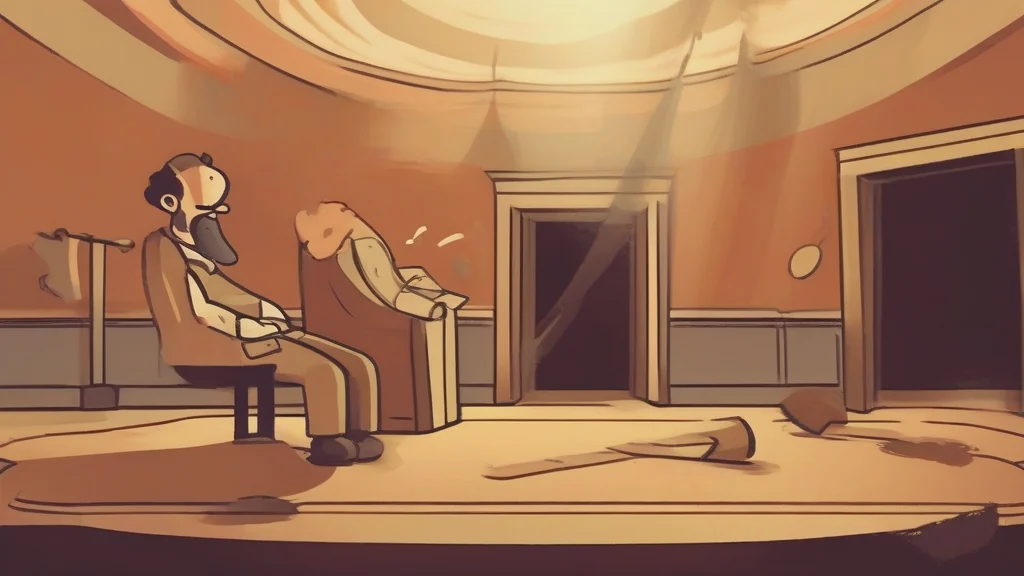
What does slapstick mean?
Slapstick is a form of comedy built around exaggerated physical behavior: clumsy accidents, mock fights, falls, collisions, misunderstandings, and other conspicuous mishaps. It is especially associated with stage and screen comedy, including silent films, cartoons, and circus or variety performance. The word describes both the comic technique and, when used attributively, the works or performers employing it. “Slapstick comedy” is more neutral, while “slapstick humor” may emphasize the noisiness, roughness, or broadness of the jokes. In modern criticism, the term can also be applied more broadly to exaggerated or deliberately foolish behavior. Its enduring appeal lies in making physical actions communicate ideas that dialogue alone cannot, often allowing performers to create comedy through timing, repetition, and escalating disaster.
A style of comedy based on exaggerated physical actions, accidents, and misunderstandings.
"The comedy relies on broad slapstick rather than intricate dialogue."
Usually appears in the singular as “slapstick” or in the common phrase “slapstick comedy.”
Characterized by exaggerated physical comedy, mishaps, or boisterous humor.
"They performed a short slapstick routine that brought the audience to its feet."
Normally used attributively, as in “slapstick comedy,” rather than as a standalone predicate adjective.
The plural is uncommon; the word is normally used in the singular or in fixed combinations such as “slapstick comedy.”
"The early films featured several comic performers developing slapsticks of their own."
Slapstick turns everyday mishaps into a language of pratfalls, chase scenes, and spectacularly bad timing.
Reviewed by Deb Chak, Editor. AI-assisted content curated by RJS Tech Solutions LLP.
Where does slapstick come from?
“Slapstick” was formed in English from “slap” and “stick.” The expression originally referred to a crude theatrical device or performance involving a slapping stick, before developing into a general term for physical comedy and associated performers. Its components are transparent: “slap” denotes a sharp blow, while “stick” refers to the implement used to produce the sound.
Related word forms
How slapstick is actually used
The term is commonly used for comedy that depends on conspicuous physical mishaps, exaggerated violence, or absurd behavior. It can suggest energetic, old-fashioned, or deliberately broad humor rather than wit or subtlety.