
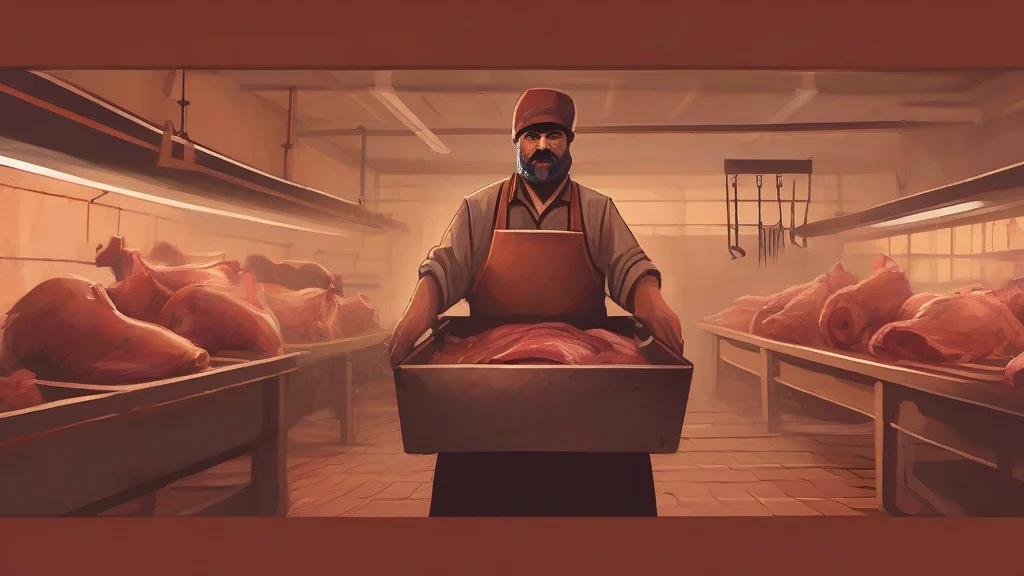
What does slaughterman mean?
A slaughterman is a person employed to kill animals, especially in a slaughterhouse. The word is uncommon in contemporary English because many modern facilities use more technical occupational language, but it remains a direct and historically recognizable description of the work involved in turning livestock into meat. In its literal sense, the term identifies the person who performs the slaughtering, distinguishing that role from the work of a butcher, who processes and sells meat. It can also appear in figurative or literary contexts to describe someone responsible for brutal killing. Understanding “slaughterman” clarifies the distinction between the act of killing animals and the later processes of preparing their meat for sale.
nounA person employed to slaughter animals, especially in a slaughterhouse. The term can also refer more generally to someone who kills or causes death in a brutal manner.
- A person whose work is to kill animals, especially in a slaughterhouse.
"The slaughterman guided the animals through the facility while maintaining a calm, professional demeanor."
"The slaughterman began the morning by cleaning and inspecting the equipment."
"The novel portrays the slaughterman as a hardened figure accustomed to death."
The standard plural changes the -a- of the singular to -e-: one slaughterman, two slaughtermen.
"The slaughtermen began preparing the facility before the first delivery arrived."
A slaughterman’s work takes place where the ordinary language of food begins: a slaughterhouse turns living animals into the meat sold by butchers.
Reviewed by Deb Chak, Editor. AI-assisted content curated by RJS Tech Solutions LLP.
Where does slaughterman come from?
The word is a compound formed within the Middle English period from “slaughter,” meaning the killing of an animal or a person, and the suffix “-man,” meaning a person who performs a specified role. It developed alongside the related occupational terms “slaughterer” and “slaughterhouse.” Its meaning follows the older sense of “slaughter,” which referred not only to the killing of livestock but also, figuratively, to violent killing or devastation.
How slaughterman is actually used
The word is uncommon in everyday modern English and may sound blunt or literary. In discussions of animal slaughter it is a specific occupational term; in figurative or historical contexts, it can imply brutal killing.
Easily confused with slaughterman
A butcher prepares and sells meat, whereas a slaughterman is specifically associated with killing animals in a slaughterhouse.