
What does slitter mean?
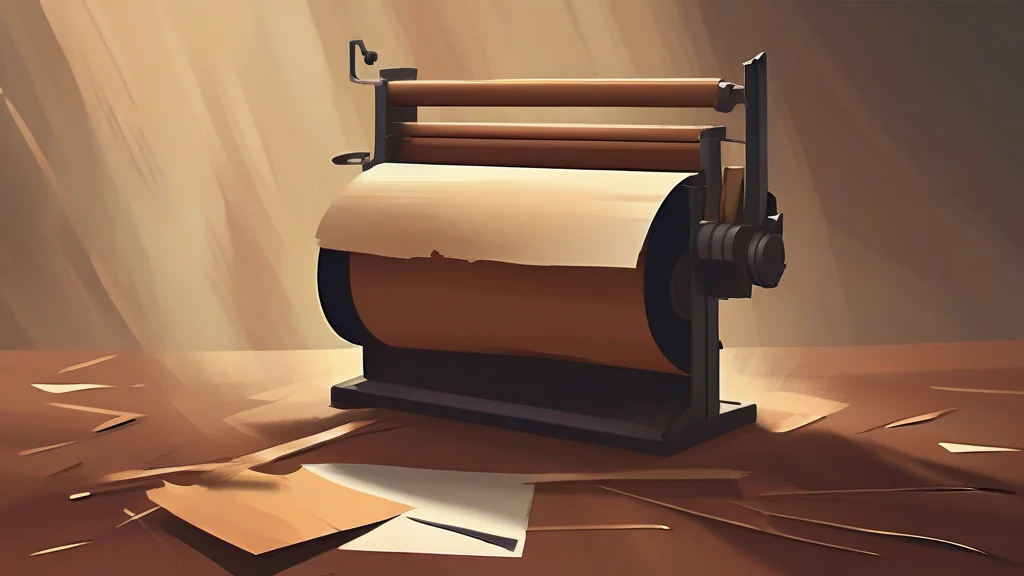
A slitter is principally a machine that cuts or slits material, especially paper and other sheet materials, into strips. In printing, packaging, and textile production, a slitter may feed wide sheets into narrower bands or prepare them for further processing. The word can also refer more generally to a person who makes slits, although that sense is uncommon outside occupational or historical contexts. As a verb, “to slitter” is rare and means to slit or cut repeatedly or into strips. In everyday English, “slitter” is not a general substitute for “cutter”: it normally implies a narrow cut made with a blade or a machine specifically designed for slitting. Understanding the distinction is useful in descriptions of industrial machinery, printing processes, and older trade vocabulary.
A person or machine that slits material, especially a machine that cuts paper or other sheet materials into strips.
"The factory installed a new slitter to prepare rolls of packaging material."
The machine sense is common in printing, paper, packaging, and textile industries; the person sense is relatively uncommon.
To slit or cut material, especially into narrow strips.
"The operator slittered the sheets before sending them to the laminating machine."
This verb is uncommon and is chiefly used in technical or occupational contexts.
Used for multiple people or machines that slit or cut material.
"The two slitters were installed beside the printing press."
From a single narrow cut to specialized machinery: “slitter” names both the person who makes a slit and the machine that cuts sheets into strips.
Reviewed by Deb Chak, Editor. AI-assisted content curated by RJS Tech Solutions LLP.
Where does slitter come from?
The word “slitter” was formed from the verb “slit” with the agent suffix “-er,” producing a name for someone or something that performs the action of slitting. The verb “slit” comes from an Old English past tense and participle related to a base meaning to divide or cleave. In later technical usage, the derived noun came to denote machinery for cutting sheets or materials into strips. Its broader sense, a person who slits, is now much less common than the industrial sense.
Related word forms
How slitter is actually used
The word is chiefly industrial or occupational and is uncommon in general conversation. In modern manufacturing contexts, it usually denotes a machine; as a person noun, it is less frequent and sounds old-fashioned or trade-specific.