
What does sloe mean?
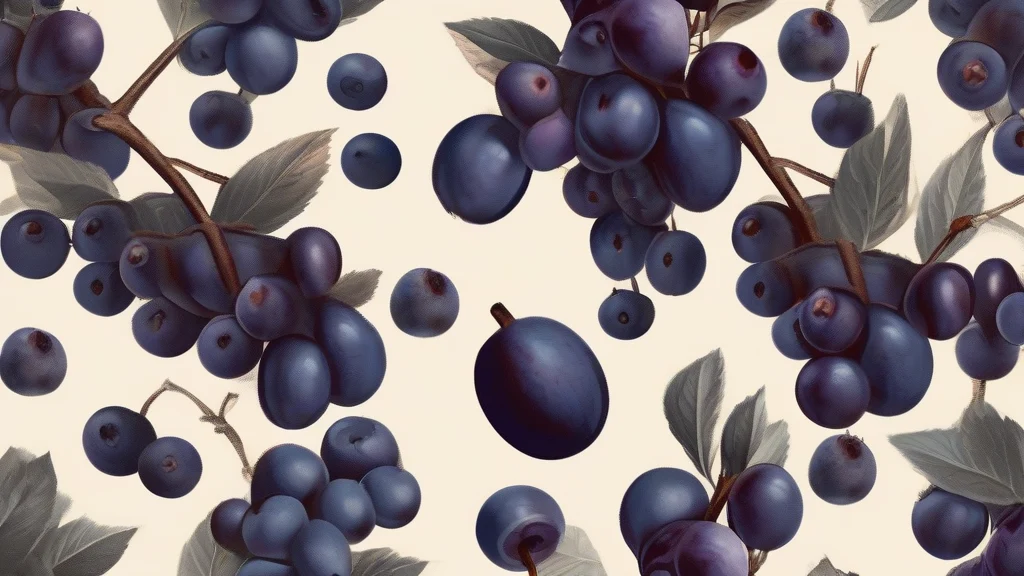
A sloe is a small, round fruit with dark-purple skin, tart flesh, and a single hard stone. It grows on the blackthorn, a thorny shrub or small tree belonging to the rose family and found across much of Europe and parts of western Asia. Sloe fruits ripen from late summer into autumn and are valued for their concentrated, sharply tart flavour. Although commonly eaten fresh, they are especially characteristic in British preserves, jams, fruit jellies, cordials, and alcoholic drinks. The best-known example is sloe gin, a clear gin-based liqueur flavoured with the fruit and often sweetened with sugar. In British usage, sloe generally denotes the fruit itself, while blackthorn is the usual name for the plant. Sloe is also sometimes used for the shrub, particularly in descriptive phrases such as a flowering sloe.
nounA small, round, dark-purple fruit with a sharp, tart flavour and a single hard stone, produced by the blackthorn, a shrub or small tree of the rose family.
- The small, dark-purple, tart fruit of the blackthorn.
- The blackthorn shrub or small tree that produces this fruit.
"The cook simmered sloes with sugar to make a rich jam for the winter."
"After the first frost, the hedges were heavy with ripe sloes."
"The old blackthorn, or sloe, grew beside the garden wall."
Use sloes for multiple fruits or instances of the fruit.
"Windfall sloes covered the grass beneath the hedgerow."
The sloe may be small, but its character is bold: its intense tartness is behind the distinctive flavour of sloe gin.
Reviewed by Deb Chak, Editor. AI-assisted content curated by RJS Tech Solutions LLP.
Where does sloe come from?
The English word comes from Middle English slo, continuing Old English slā, the name of the fruit or tree. Its development can be traced through Old and Middle English forms, and it has relatives in Scots and other Germanic languages, including Dutch slo and German Schlehe.
How sloe is actually used
In British English, sloe often refers specifically to the fruit, while the tree or shrub is more usually called blackthorn. The fruit is commonly used in preserves, cordials, gin, and other alcoholic drinks. Because the word ends in -e, it takes 'a' in the singular: a sloe.
Easily confused with sloe
A sloe is the tart purple fruit of a blackthorn, whereas slow is an adjective or adverb describing a low speed or pace.