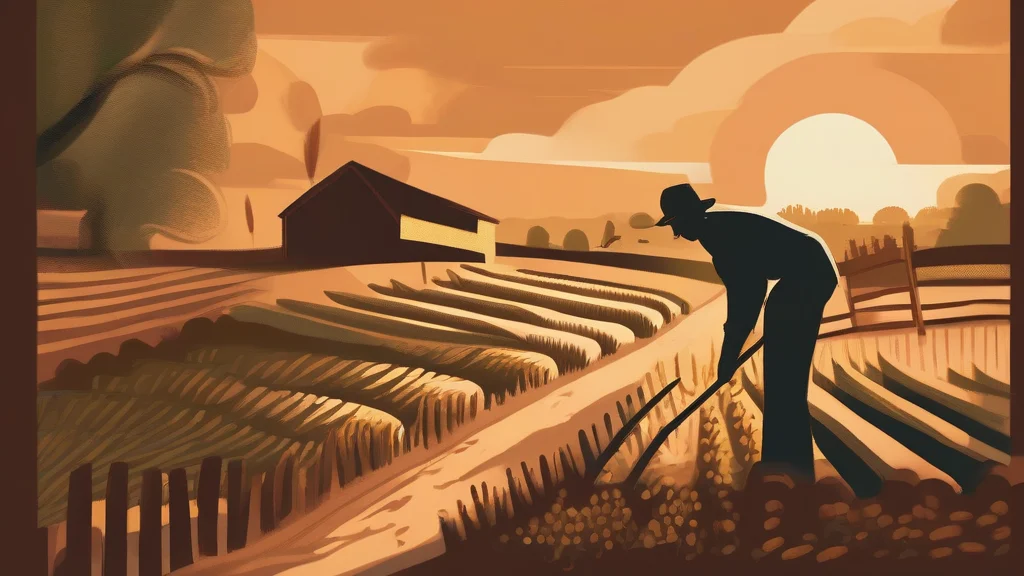
What does smallholder mean?
A smallholder is a person who owns or manages a small farm or plot of land, typically used for agriculture or livestock. This term is often associated with self-sufficiency and a close connection to the land. Smallholders play a crucial role in local food systems, providing fresh produce to their communities and contributing to rural development. The term is commonly used in British and US contexts, and is often used interchangeably with terms like farmer, landowner, and homesteader. Understanding the role of smallholders is essential for promoting sustainable agriculture and supporting local economies.
nounA person who owns or manages a smallholding, typically a small farm or plot of land used for agriculture or livestock.
- A person who owns or manages a small farm or plot of land.
- A person who cultivates a small piece of land, often as a tenant.
"The smallholder grew a variety of vegetables and fruits on their land, selling them at the local market."
"The smallholder carefully tended to their crops, ensuring a bountiful harvest."
"As a smallholder, she was able to live off the land and sell her excess produce at market."
The plural form smallholders is used to refer to multiple individuals who own or manage small farms or plots of land.
"The smallholders in the community came together to form a cooperative, sharing resources and expertise to improve their agricultural practices."
Reviewed by Deb Chak, Editor. AI-assisted content curated by RJS Tech Solutions LLP.
Etymology of smallholder
The term smallholder originated in the late 19th century, derived from the words 'small' and 'holding', referring to a small piece of land or property. The term has its roots in British English, where it was used to describe small-scale farmers and landowners. Over time, the term has been adopted in US English as well, with similar connotations of small-scale agriculture and self-sufficiency.
How smallholder is actually used
The term smallholder often carries a connotation of self-sufficiency and a close connection to the land. It is commonly used in discussions of sustainable agriculture and rural development.