
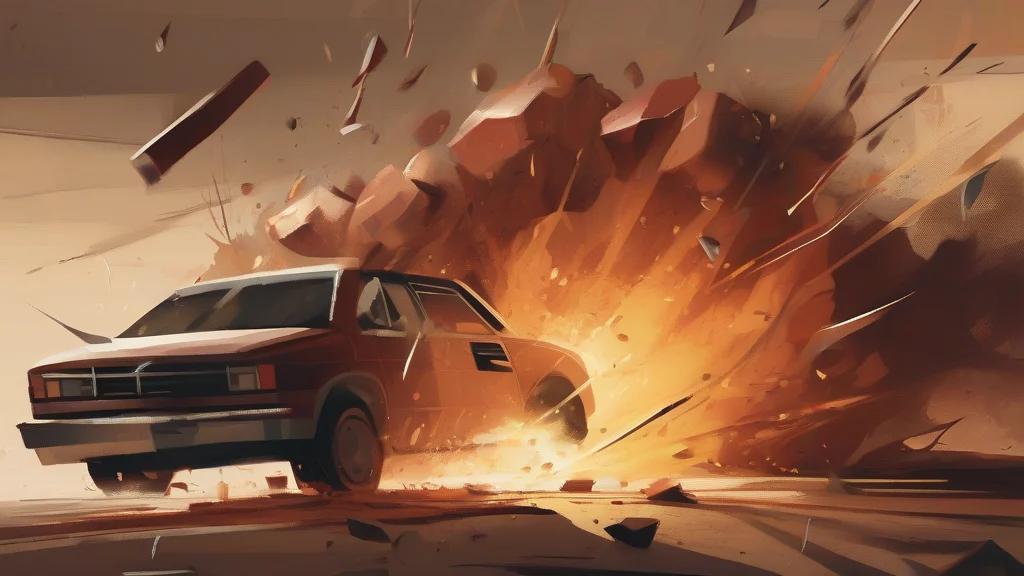
What does smash mean?
“Smash” is a versatile verb and noun associated with force, impact, destruction, and spectacular success. As a verb, it can describe breaking or shattering something, crashing into another object, moving with great speed, or achieving an exceptional result, as in “smash the record.” As a noun, it may refer to a powerful blow or crash, an overwhelming success, or a highly successful song, film, or other work. The word is especially frequent in reporting about music, sport, publishing, and entertainment, where “smash hit” describes something that becomes an enormous popular success. Its energetic sound reinforces its sense of impact, while its figurative uses extend that idea from physical force to exceptional achievement.
To break or destroy something by striking it with great force; to collide with something; or to achieve an exceptionally successful result.
"The team smashed its previous record and won the championship."
The success sense is especially common in informal reporting and entertainment contexts.
A powerful blow or crash; an overwhelming success; or a highly popular song, film, or other work.
"The single became an instant smash and reached audiences worldwide."
The success senses are commonly informal, particularly in the expressions “a smash hit” and “a smash success.”
The plural is used for separate blows or crashes and for individual highly successful works, especially songs, films, or theatrical productions.
"The musical was one of the smashes of the season."
From breaking something apart to breaking a record, “smash” captures the idea of forceful impact and spectacular success.
Reviewed by Deb Chak, Editor. AI-assisted content curated by RJS Tech Solutions LLP.
Where does smash come from?
The word is recorded in English by the early 17th century, initially in the sense of striking or breaking something with force. Its exact origin is uncertain. Over time, it acquired figurative meanings involving loud crashes, rapid movement, and extraordinary success, many of which developed from the underlying idea of a powerful impact.
Related word forms
How smash is actually used
The verb is common in both formal and informal English. Phrases such as “smash a record” and “a smash hit” are especially associated with popular music, sport, and entertainment; “smash” meaning to break or destroy can sound forceful or informal depending on context.