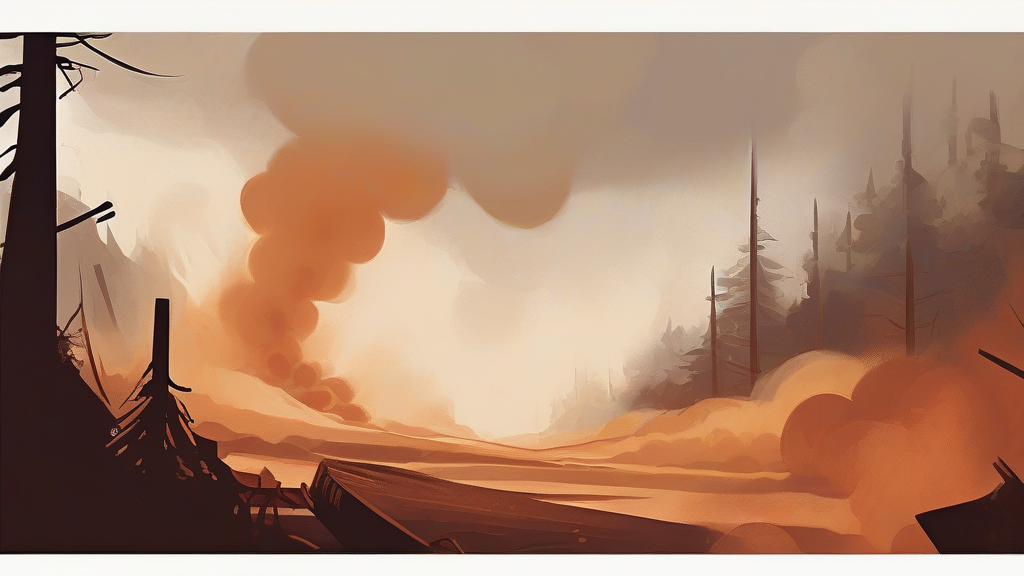
What does smouldering mean?
Smouldering is an adjective that describes a slow and often smoky fire, or a strong and often subtle feeling of anger or desire. It can be used to describe both literal and figurative fires, and often carries a sense of intensity or passion. The word can also imply a slow-burning or simmering emotion, making it a useful term for describing complex or nuanced feelings. Smouldering is often used in literature and poetry to create a sense of atmosphere or mood, and can be used in a variety of contexts to add depth and complexity to a description. Overall, smouldering is a rich and evocative word that can add a lot of meaning and emotion to a sentence.
Having or showing a slow and often smoky fire.
"The smouldering embers of the fire glowed in the dark."
Smouldering can be used to describe a literal fire that is burning slowly and smokily.
Having or showing a strong and often subtle feeling of anger or desire.
"Her smouldering gaze hinted at a deeper passion."
Smouldering can be used to describe a figurative fire that is burning with intensity or passion.
Reviewed by Deb Chak, Editor. AI-assisted content curated by RJS Tech Solutions LLP.
Etymology of smouldering
The word smouldering comes from the verb smoulder, which means to burn slowly and smokily. This verb is derived from the noun smoke, which refers to the visible particles that are emitted when something is burning. The word smoulder has been in use since the 16th century, and has been used to describe both literal and figurative fires throughout its history.
How smouldering is actually used
Smouldering can be used to describe both literal and figurative fires. It often carries a sense of intensity or passion, but can also imply a slow-burning or simmering emotion.