
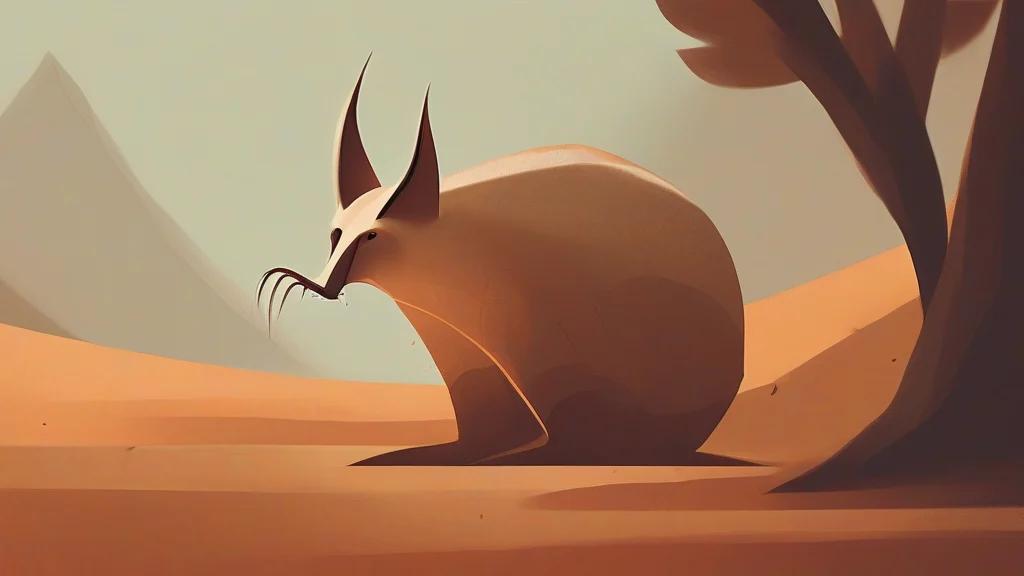
What does snouted mean?
Snouted is an adjective meaning that an animal has a projecting muzzle or snout. It is especially useful in descriptive writing about anatomy, natural history, and the physical features that distinguish one animal from another. The word normally appears directly before the name of an animal, as in “snouted lizard” or “snouted shark,” although it can also follow a noun when the feature is being described. Its use implies a forward-projecting muzzle rather than merely a long or prominent human nose. In older or literary usage, snouted is also the past tense and past participle of the verb snout, meaning to explore, seek, or root about with the nose. In that construction, it may describe an animal probing the ground or searching for food. Overall, the word is concrete and zoological, making it more characteristic of descriptive prose than everyday conversation.
Having a projecting muzzle or snout.
"The small, snouted mammal uses its muzzle to search the soil for insects."
Commonly used attributively in zoological and descriptive contexts.
Past tense and past participle of snout: to explore or seek with the nose.
"The pig snouted through the straw, searching for food."
This is a relatively uncommon, somewhat literary usage.
In its most precise sense, snouted describes an animal whose face projects forward, like a muzzle designed for rooting or feeding.
Reviewed by Deb Chak, Editor. AI-assisted content curated by RJS Tech Solutions LLP.
Etymology of snouted
The adjective is formed from snout plus the suffix -ed, literally meaning “having a snout.” The verb form snouted uses the same past-tense and past-participle ending added to snout. The noun snout is of Germanic origin and is historically associated with the projecting part of an animal's face; related forms include snouty and snouting.
How snouted is actually used
As an adjective, “snouted” is mainly descriptive or taxonomic and usually occurs before a noun. As a verb form, it is relatively uncommon and often sounds literary or old-fashioned.