
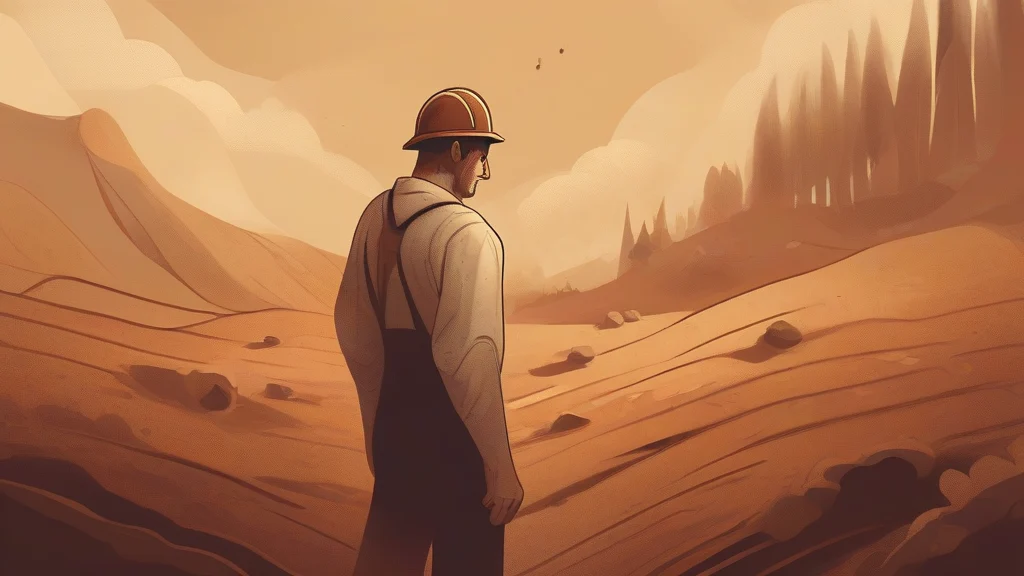
What does soilier mean?
Soilier is the comparative form of the adjective soily. It describes something that contains, is covered with, or has become marked by more soil, dirt, or mud than something else. The word is especially natural when describing land or paths affected by rain, gardening, construction, or other activity that loosens and spreads earth. Its use can suggest that the surface is not merely dirty but distinctly muddy or unsuitable for walking, working, or other practical purposes. In everyday speech, dirtier may be a more familiar substitute, while soilier has a slightly more focused meaning because it specifies soil or earth rather than dirt in general. For example, a path may become soilier after heavy rain, and a farmer may avoid the soilier parts of a field until they dry.
adjectiveMore soily; containing or covered with a greater amount of soil, dirt, or mud.
- Containing or covered with more soil, dirt, or mud than before or than something else.
"The path became so soilier after the rain."
"The lower field was soilier after the storm."
"His boots became soilier as he worked in the garden."
Soilier is the comparative of soily: after rain, even a familiar path can become considerably soilier.
Reviewed by Deb Chak, Editor. AI-assisted content curated by RJS Tech Solutions LLP.
Where does soilier come from?
The word derives from soil, an Old English term for earth, especially the upper layer of earth in which plants grow. The adjective soily was formed from that older noun, and soilier is its comparative form. The separate words soil and soily developed through the same English root, while their modern senses reflect the continued association of the soil with dirt and mud on people, clothing, and ground.
Related word forms
How soilier is actually used
This is the comparative form of the adjective soily. It is used mainly when making a comparison and can be followed by than.