
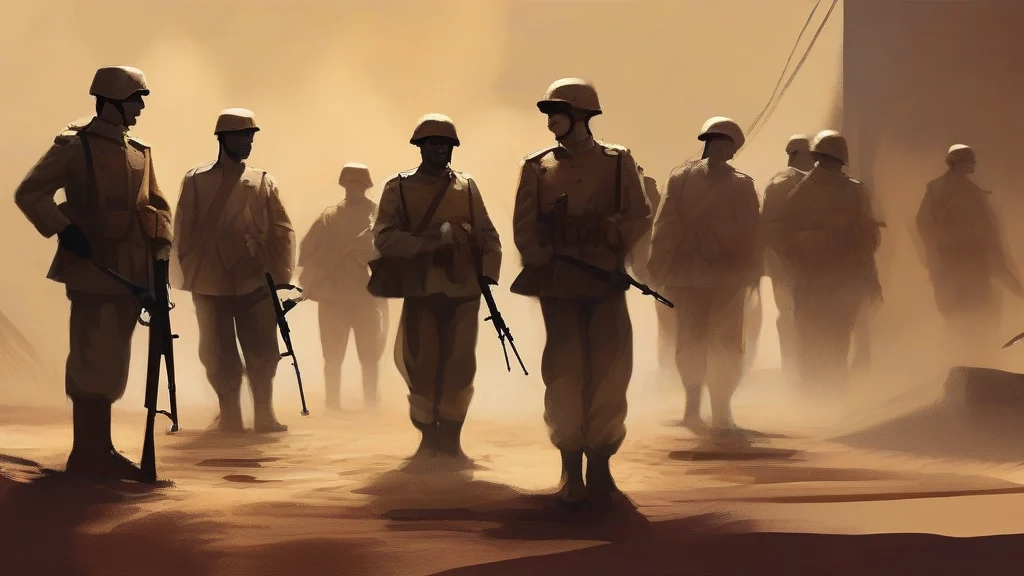
What does soldiery mean?
Soldiery is a formal noun referring to an organized body of soldiers or the military forces of a state. It may denote the soldiers belonging to a particular army, as in “the garrison's soldiery refused to surrender,” or soldiers and troops collectively, as in “the nation maintained a powerful soldiery.” The word often conveys discipline, organization, and membership in a military force rather than focusing on any single individual. It is especially common in historical writing, political commentary, and descriptions of warfare. In modern everyday speech, “troops,” “armed forces,” or simply “the military” are generally more familiar choices. Soldiery nevertheless remains useful because it distinguishes the organized military body itself from the activity of fighting, individual soldiers’ personal qualities, and the broader civilian population.
nounSoldiery means the soldiers belonging to an army or other organized military force, especially when considered as a group. It can also refer more broadly to soldiers or troops as a class.
- The soldiers of an army or other organized military force, considered collectively.
- Soldiers or troops as a general class or profession.
"The regiment was known for the courage and discipline of its soldiery."
"The king mustered his soldiery before the battle."
"The novel portrays the hardship endured by soldiery far from home."
Usually uncountable and treated as a collective noun. The plural is uncommon and would normally refer to distinct organized bodies of soldiers.
"The histories compare the soldieries of several rival kingdoms."
Soldiery can name an entire collective of troops, turning many individual soldiers into a single body of people.
Reviewed by Deb Chak, Editor. AI-assisted content curated by RJS Tech Solutions LLP.
Where does soldiery come from?
Soldiery derives from French, where it developed from the same source as “soldier.” The word entered Middle English in a context associated with military organization and service. Its later form with the ending -y reflects the historical English tendency to form collective nouns, comparable in function with words such as “infantry” and “cavalry.”
How soldiery is actually used
The word is relatively formal and literary. It is now most often encountered in historical writing, military history, and formal prose; in everyday use, “troops” or “the military” are more natural.