
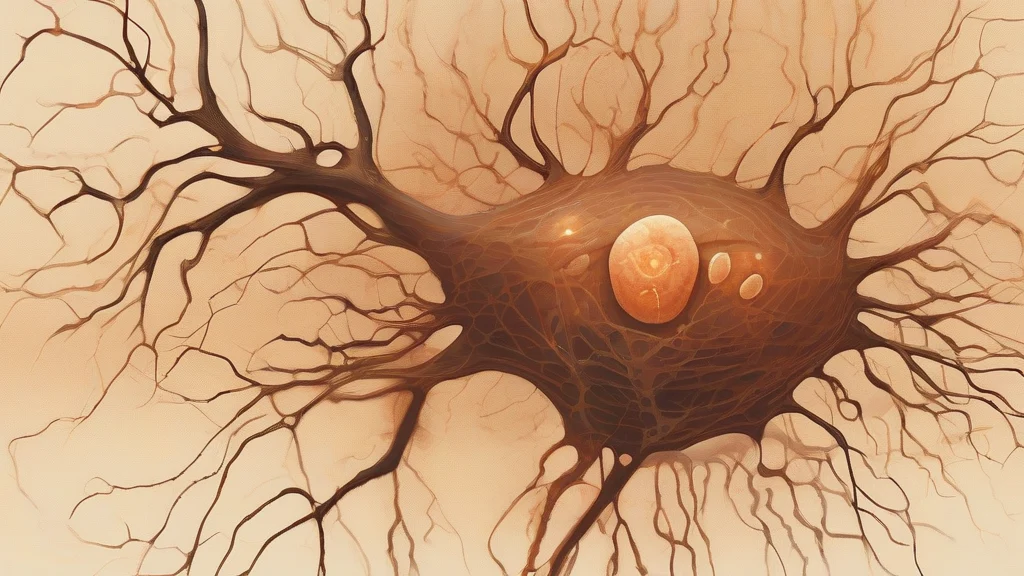
What does soma mean?
Soma is a formal and technical word for the body or main mass of an organism. In anatomy and cell biology it commonly denotes the cell body, especially the central body of a neuron, including its nucleus; in botany and zoology it can refer more broadly to the organized body of a plant or animal. The word also has a general literary use for the principal bulk of a thing, although body is far more natural in ordinary speech. A separate established sense concerns the soma plant and the potent ritual drink prepared from it in ancient Indian religion, including Vedic and Buddhist traditions. These uses should not be conflated simply because the modern English words look alike: the bodily sense comes from Greek, while the ritual term entered English through Sanskrit. In general writing, soma suits scientific, philosophical, or deliberately elevated contexts. Its technical precision and unusual history make it useful when the whole organism, a cell body, or a defining mass is meant rather than a person regarded socially or psychologically.
nounSoma means the body or main mass of a living organism, especially the central cell body of a neuron; more broadly, it can mean the principal bulk of a thing. In specialized historical and religious usage, it also names a plant and the ritual drink prepared from it.
- The body of a living organism, especially the main body of an animal or plant apart from appendages.
- The cell body of a neuron or other cell, particularly the region containing the nucleus.
- The principal mass or bulk of something.
- An intoxicating ritual drink prepared from the soma plant and, by extension, the plant itself.
"The soma of the neuron contains its nucleus and most of the cell's organelles."
"The soma of the neuron contains the nucleus and most of the cell's organelles."
"Ancient Vedic rites included offerings of soma, a ritual drink prepared from a plant."
The standard plural is somas, especially in biological and anatomical contexts.
"Researchers examined the somas of several neurons under a microscope."
A neuron's soma is its command center: the cell body that houses the nucleus and much of the machinery needed to keep the cell alive.
Reviewed by Deb Chak, Editor. AI-assisted content curated by RJS Tech Solutions LLP.
Where does soma come from?
The principal sense comes from Greek sōma (σῶμα), meaning body, a root that also underlies English forms such as somatic and autosome. English adopted the noun for scientific and anatomical uses and developed the broader sense of the principal mass or bulk of a thing. The ritual-drink sense has a separate etymological strand: soma was borrowed through Sanskrit soma, the name of a plant and its intoxicating juice used in ancient Vedic and later Buddhist rites.
Related word forms
How soma is actually used
Soma is formal or technical in scientific, philosophical, and literary contexts; ordinary English usually prefers body or cell body. The ancient Indian religious sense is specialized and historically distinct from the Greek-derived bodily sense.
Easily confused with soma
A soma is the body or main mass of an organism, whereas a stoma is a pore in the surface of a plant, especially one involved in gas exchange.
Soma is a formal or technical term for a body or mass, while sofa is the ordinary word for a long upholstered seat.