
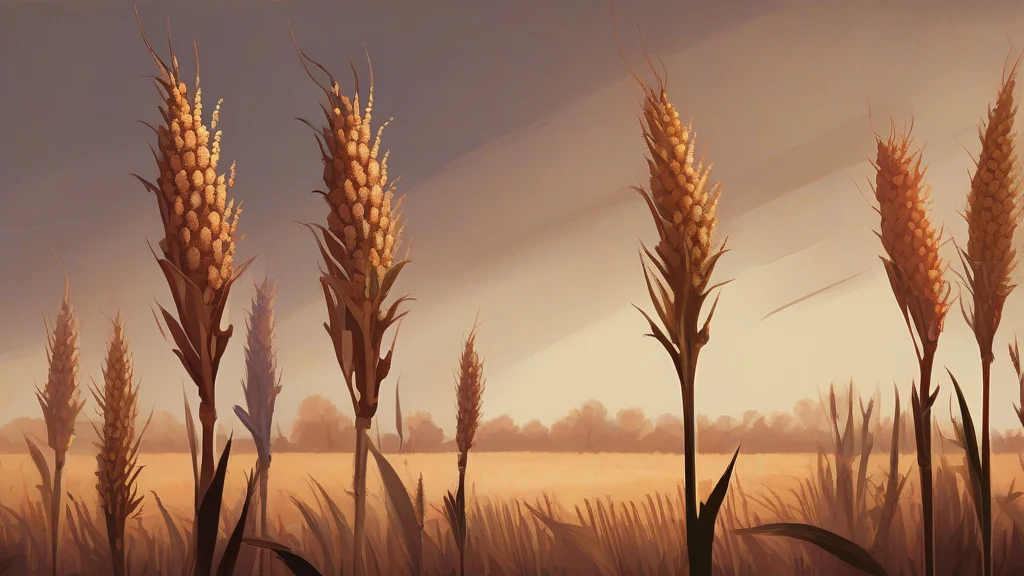
What does sorgo mean?
Sorgo is a noun denoting varieties of sorghum, particularly the sweet type with thick, sugar-rich stalks. It may be cultivated for syrup, grain, animal fodder, or industrial uses, and in historical American agriculture it was an important source of sorghum molasses. The word is more specialized than the broader term sorghum and is now encountered chiefly in agricultural writing, historical sources, and discussions of traditional syrup production. In everyday usage, people are more likely to say sorghum or sweet sorghum. Nevertheless, sorgo remains useful because it draws attention to the particular varieties and agricultural purposes that have made sorghum a globally significant cereal crop.
nounAny of several varieties of sorghum, especially sweet sorghum, cultivated for its sugar-rich stalks, grain, or fodder.
- A variety or varieties of sorghum, particularly sweet sorghum, used to produce sugar-rich syrup, fodder, or grain.
"Farmers in the American South historically cultivated sorgo to produce sorghum syrup."
"The plantation grew sorgo and boiled its juice into dark, concentrated syrup."
"Sorgo is well suited to warm climates and can provide valuable fodder as well as a marketable grain crop."
The plural is uncommon in general use because the word normally refers to sorghum as a crop or to an uncountable category.
"Several sorgos are cultivated in the warm, dry valleys of the region."
Sorgo turned a tall African grain into a source of syrup, helping the drink become a familiar part of American life.
Reviewed by Deb Chak, Editor. AI-assisted content curated by RJS Tech Solutions LLP.
Where does sorgo come from?
The English word sorgo comes through Italian from Medieval Latin syricum, a term derived from Ancient Greek. Greek sources in turn borrowed the name from an Egyptian term connected with sorghum. The name passed into several European languages, giving forms such as Italian sorgo, French sorgho, and Portuguese sorgho, while English also adopted the broader form sorghum.
How sorgo is actually used
The term is less common in everyday modern English than sorghum. It occurs in agricultural, historical, and regional contexts and is especially associated with sweet sorghum in the United States.
Easily confused with sorgo
Sorghum is the broader name for the cereal plant and its many varieties, while sorgo more often refers to varieties grown for sweet stalks, syrup, fodder, or grain.