
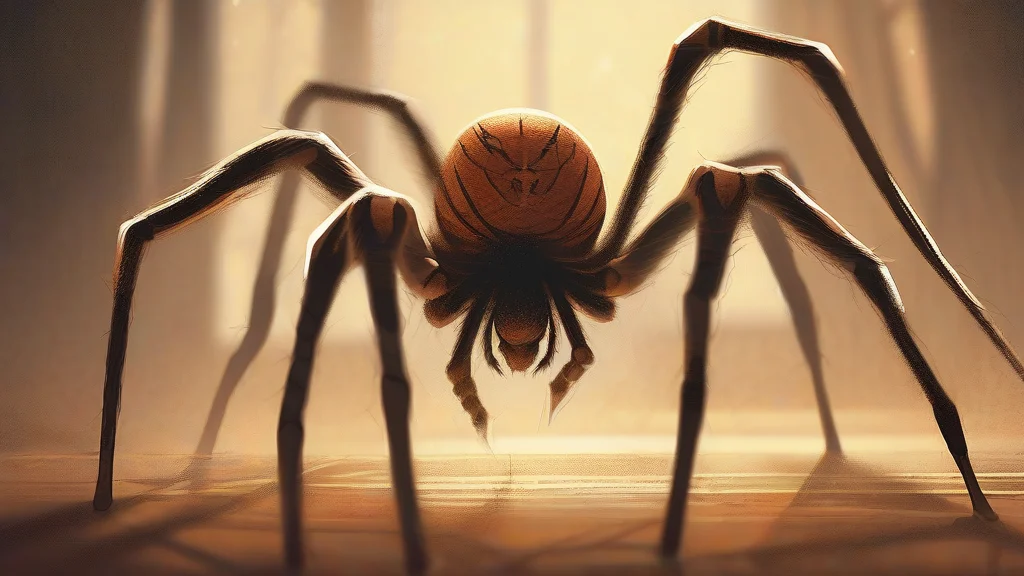
What does spider mean?
A spider is an arachnid, a type of animal distinguished from insects by having eight rather than six legs. Spiders are often associated with silk: many spin webs to capture prey, although not every species makes an obvious web, and some use silk for egg sacs, shelters, draglines, or other purposes. The word can also be used figuratively for something that resembles a spider or a web, especially a complex network of connections. In everyday descriptions, “spider web” is a familiar pairing, while “spider legs” evokes the characteristic eight-legged body. Because spiders are both predators and skilled silk producers, they are a frequent subject in natural-history writing, children’s literature, and visual art. Although the animal may appear frightening, many spiders are harmless to people and play an important role in ecosystems by controlling insect populations.
nounA spider is an arachnid with eight legs, usually capable of producing silk for making webs or other structures. In figurative use, the word can refer to something web-like or interconnected.
- An eight-legged arachnid, many species of which produce silk and build webs.
- A thing resembling or functioning like a spider, especially a web-like structure.
"A spider had woven a delicate web across the garden fence."
"The gardener found a large brown spider resting on the rosebush."
"The cracks in the old wall formed a spider-like network across the surface."
The plural is formed by adding -s.
"Several spiders were living in the corners of the porch."
A spider is both a hunter and a builder: it engineers silk structures while solving the problem of capturing prey.
Reviewed by Deb Chak, Editor. AI-assisted content curated by RJS Tech Solutions LLP.
Where does spider come from?
The English word comes from Old English spider, with the modern form established during the Middle English period. Its name is connected with spinning and the production of silk: the word belongs to a Germanic group that includes forms related to English “spin.” The development of the meaning reflects the long-standing association between spiders and their silk threads, which they use to build webs and perform other functions.
Related word forms
How spider is actually used
In ordinary use, “spider” is a neutral and familiar term. The figurative sense is usually metaphorical, as in “a spider network of linked computers.” “Spider” is not normally used as a verb in standard modern English.