
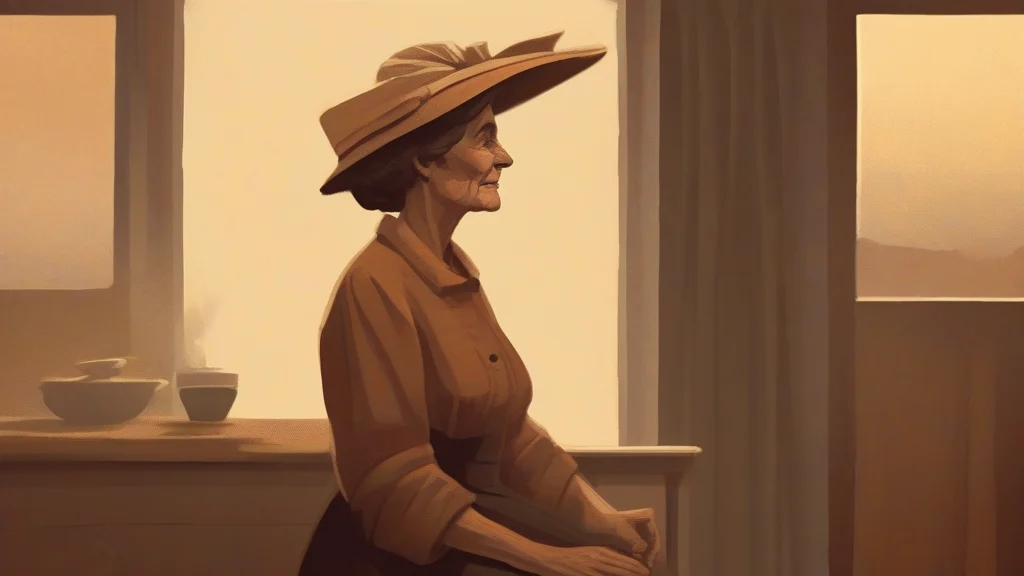
What does spinster mean?
Spinster most commonly denotes an unmarried woman, especially one considered to be beyond the customary age for marriage. The word has a strongly dated and often derogatory modern air: it can sound more judgmental than "single woman" and, unlike the male equivalent "bachelor," historically placed social pressure on women to marry. Older literary use often applies it to an independent, unmarried woman without overt hostility, although context may make that independence the source of a joke or stigma. In Middle English, a spinster was literally a woman who spun thread, an occupational description before the word shifted toward its marital sense. The label also has an older, technical use for a female spider. Because "spinster" now carries assumptions about age, social status, and desirability, "unmarried woman" or "single woman" is usually clearer and less loaded unless the historical or critical tone is intentional. The word remains useful in reading older literature and in discussing the different social meanings attached to male and female marital status.
nounAn unmarried woman, especially one regarded as older than the customary age for marriage. The term is now often dated or derogatory; historically, it also denoted a woman whose occupation was spinning thread.
- An unmarried woman, especially one considered beyond the customary age for marriage; this use is now often dated or derogatory.
- Historically, a woman whose occupation was spinning thread or yarn.
- A female spider.
"The family regarded the independent spinster with equal measures of admiration and disapproval."
"Her elderly aunt had remained a spinster and maintained a strict independence."
"Every week, the village spinster collected the wool and worked it into thread."
The regular plural is "spinsters."
"The novel follows the lives of three spinsters living in the same boarding house."
Spinster began as a job description for a woman who spun thread—before becoming one of society's least welcoming labels for an unmarried woman.
Reviewed by Deb Chak, Editor. AI-assisted content curated by RJS Tech Solutions LLP.
Etymology of spinster
The word comes from Middle English spinester, formed from spin, in the sense of spinning thread, and the suffix -ster, a feminine agent suffix. It originally referred occupationally to a woman who spun yarn or thread and only later acquired the now-dominant sense of an unmarried woman. The related word spinner likewise names one who spins, while spindle denotes the implement around which thread is wound.
How spinster is actually used
The modern use is often pejorative or literary and can imply that an unmarried woman has failed to conform to social expectations. Unlike the generally neutral term "bachelor" for an unmarried man, "spinster" has traditionally carried assumptions about age, social status, and desirability. "Single woman" or "unmarried woman" is normally more neutral unless a historical, literary, or critical tone is intended.
Easily confused with spinster
A spinner is someone or something that spins, while a spinster was originally a woman who spun thread and later became a label for an unmarried woman.