
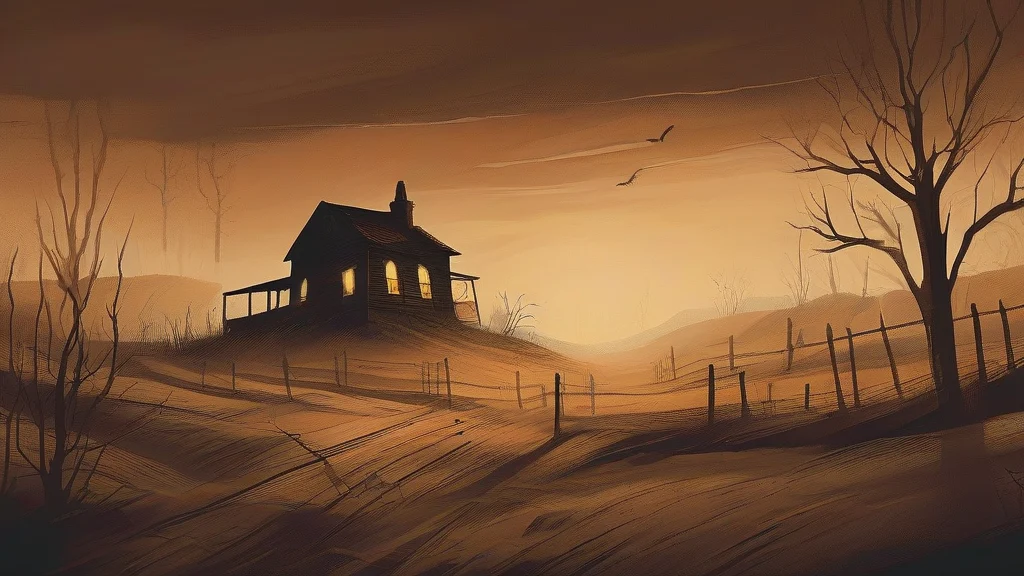
What does spookiness mean?
Spookiness is the quality of being spooky: an atmosphere that is eerie, unsettling, or suggestive of ghosts or hidden danger. It commonly describes places, settings, stories, films, and experiences, as in “the spookiness of an abandoned house” or “a growing sense of spookiness.” The word is related to, but not identical with, “spooky,” which is an adjective describing something frightening or ghostly; “spookiness” names the quality itself. In everyday use, it often suggests psychological unease rather than physical danger, so it can apply to a shadowy room, a strange sound, or a disturbing story without implying an actual supernatural presence. Although more common in informal and creative contexts, it is understood in standard English in both British and American usage. It is especially useful for discussing atmosphere, and its suffix, “-iness,” makes it a compact noun for converting the adjective “spooky” into an abstract quality.
nounThe quality of being spooky, especially the eerie or unsettling atmosphere of a place, situation, or experience.
- The quality or atmosphere of being eerie, unsettling, or ghostly.
"The old house had a spookiness that made the children hesitate at the threshold."
"The abandoned hospital had an almost physical spookiness."
"Her film is praised for using shadows and silence to create a subtle sense of spookiness."
Normally uncountable, with no distinct plural form in ordinary use.
"The candlelight added to the room's spookiness."
Reviewed by Deb Chak, Editor. AI-assisted content curated by RJS Tech Solutions LLP.
Where does spookiness come from?
Spookiness is an English formation based on “spook,” a word associated with ghosts or frightening apparitions. The productive suffix “-iness” forms an abstract noun meaning the quality or state of being spooky. Related English forms include “spooky” and “spookery”; the deeper historical origin of “spook” is uncertain, so no more distant cognate should be asserted confidently.
How spookiness is actually used
Usually informal and literary in tone. It emphasizes an eerie atmosphere or unsettling quality rather than fear caused by a specific threat, and is normally uncountable.
Easily confused with spookiness
Spookiness is the noun naming an eerie quality or atmosphere, whereas spooky is the adjective describing a person, place, object, or event as frightening or ghostly.