What does squama mean?
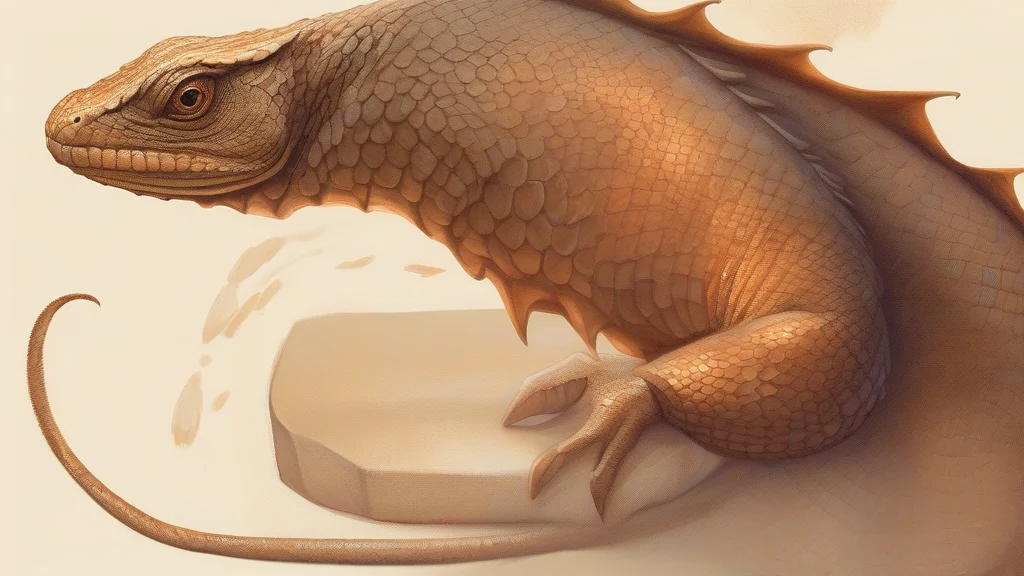
Squama refers to a thin, plate-like scale, especially one on the skin of a reptile or fish, or a similar structure on a bird's leg. The term is derived from Latin 'squama' and Greek 'σκάμμα' (skamma), and is related to Old French 'esquame'. In biology, squama is used to describe the scales on reptiles and fish, while in ornithology, it refers to the scutes on a bird's leg. The term is often used in scientific and technical contexts, and is an important concept in the study of animal anatomy and biology. Squama is a useful word for anyone interested in biology, zoology, or ornithology, and is a key term in the field of animal science.
nounA thin, plate-like scale, especially one on the skin of a reptile or fish, or a similar structure on a bird's leg.
- A thin, plate-like scale, especially one on the skin of a reptile or fish, or a similar structure on a bird's leg.
"The snake's body was covered in small, overlapping squama."
"The snake's body was covered in small, overlapping squama."
"The bird's leg had a hard, protective squama."
The plural form 'squamae' is used in scientific and technical contexts to refer to multiple scales or scutes.
"The snake's body was covered in small, overlapping squamae."
Reviewed by Deb Chak, Editor. AI-assisted content curated by RJS Tech Solutions LLP.
Etymology of squama
The word 'squama' is derived from Latin 'squama', which means 'scale' or 'plate'. This Latin term is also related to Greek 'σκάμμα' (skamma), which means 'scale' or 'scute'. The word 'squama' was borrowed into Old French as 'esquame', and has since been adopted into various languages, including English.
How squama is actually used
In biology, squama refers to the scales on reptiles and fish, while in ornithology, it refers to the scutes on a bird's leg.