
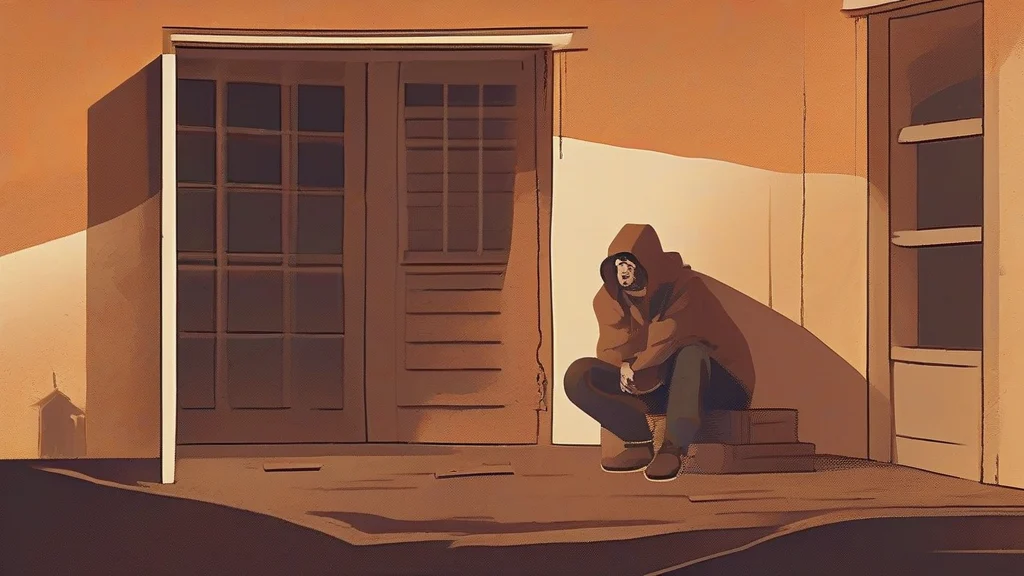
What does squatter mean?
A squatter is someone who lives in or occupies land or a building without the owner's permission or a formally recognized right to do so. The word is especially associated with people who settle on vacant, undeveloped, or abandoned property, often in groups or communities, although it can also describe a single unauthorized occupant. In everyday use, “squatter” may carry a negative connotation because the occupation conflicts with property rights; in legal and historical contexts, however, the term can describe the basis of an adverse-possession claim or a recognized squatters' rights system. The word is distinct from simply calling someone a trespasser: occupation that is long-term and residential is central to the usual meaning. Today, the term is frequently used in reporting on housing disputes, land seizures, informal settlements, and the redevelopment of occupied properties.
A person who occupies land or a building without the owner's permission or a legally recognized right to do so.
"The authorities removed a group of squatters from the disputed property."
Often implies more or less continuous residence or occupation; the legal implications vary by jurisdiction.
To occupy or settle in land or a building without the owner's permission or a legally recognized right.
"They squatted in the empty factory until the eviction order was issued."
Usually used intransitively and associated with unauthorized residential occupation.
The plural is used for individual occupants and for groups occupying property without authorization.
"Local residents complained that squatters had occupied the vacant lot."
A squatter can turn an abandoned building into a home, but the phrase “squatter's rights” reflects a contested area of land law.
Reviewed by Deb Chak, Editor. AI-assisted content curated by RJS Tech Solutions LLP.
Etymology of squatter
“Squatter” is an agent-noun formation from “squat” plus the suffix “-er,” meaning a person who squats or settles without authorization. The word developed in the modern period alongside the expansion of land ownership, urbanization, and disputes over vacant property. Its related forms “squatted” and “squatting” express the action of taking up residence or possession without permission. The term is not etymologically related to the older verb meaning to sit on one's heels.
Related word forms
How squatter is actually used
The term is commonly used in legal, political, and historical contexts and can sound more specific than “trespasser” because it often suggests residence or settlement rather than brief intrusion. In some legal systems, “squatter's rights” refers to rights arising from long-term occupation, although the precise rules vary by jurisdiction.