
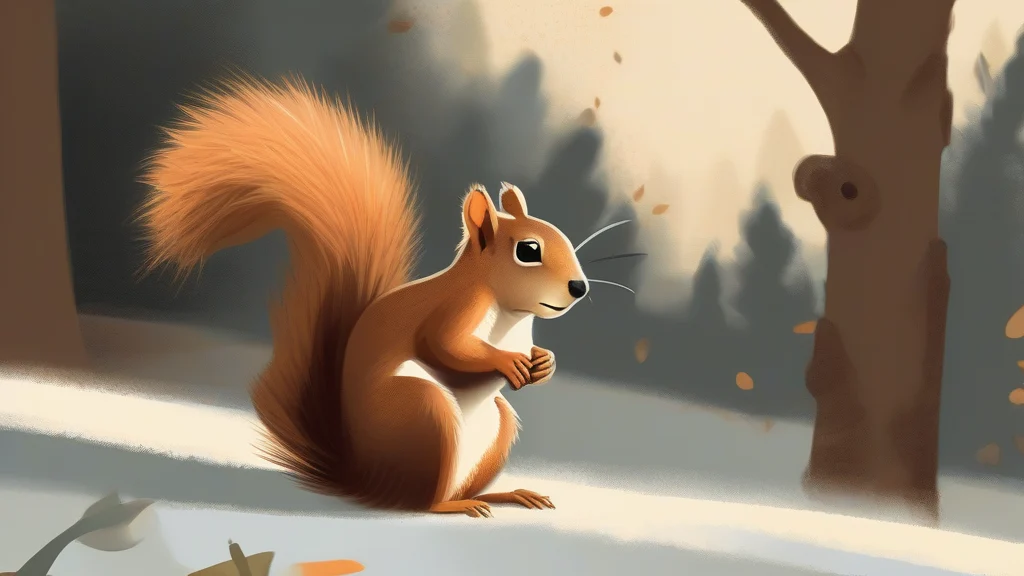
What does squirrel mean?
A squirrel is a small rodent recognizable in many species by its prominent front teeth and bushy tail. Squirrels are found throughout much of the world in woodland, parks, gardens, and other habitats, although some species live mainly on the ground. They eat a varied diet that can include seeds, nuts, fruit, fungi, insects, and occasionally small vertebrates. Their adaptability and food-storing habits have made them familiar figures in cities as well as forests. In ordinary conversation, the word normally means the animal itself, but it can also jokingly describe someone whose behavior seems unusually eccentric or irrational. As a verb, “to squirrel away” means to hide or store something securely for later use, especially money, food, or possessions. The word is used in both British and American English, with no major regional difference in its standard meanings. Its rich associations with thrift, quick movement, and apparently purposeful activity make it useful both literally and figuratively.
A small rodent with a long, often bushy tail and strong front teeth, typically living in trees or on the ground and storing food for winter or other periods of scarcity.
"A squirrel sat on the fence, nibbling an acorn."
In informal contexts, the word can also mean an eccentric or seemingly irrational person.
To hide away or store something, especially money or food, for future use.
"She squirrelled away a portion of her earnings in a separate account."
Commonly used in the phrasal expression “squirrel away”; it is informal but widely understood.
The standard plural is “squirrels,” with an added -s.
"Several squirrels gathered around the bird feeder."
The squirrel's oversized incisors are not just for cracking nuts; they also enable it to gnaw through tough seeds, fruit, and insects.
Reviewed by Deb Chak, Editor. AI-assisted content curated by RJS Tech Solutions LLP.
Where does squirrel come from?
English borrowed the word through Old French squirrel from Latin sciurus. Latin in turn had borrowed the term from Greek skíouros, “squirrel,” which is also the source of scientific names in the squirrel family, including the genus Sciurus. The English form developed through medieval usage and became established for both the familiar animal and the modern informal and verb senses.
Related word forms
How squirrel is actually used
The noun is standard in both British and American English. The informal sense meaning an eccentric person is usually humorous and mildly disparaging, while the verb is chiefly used in the phrasal expression “squirrel away,” especially for money or food.
Easily confused with squirrel
A squirrel generally has a long bushy tail, whereas a chipmunk has distinctive stripes along its back and a more compact tail.