
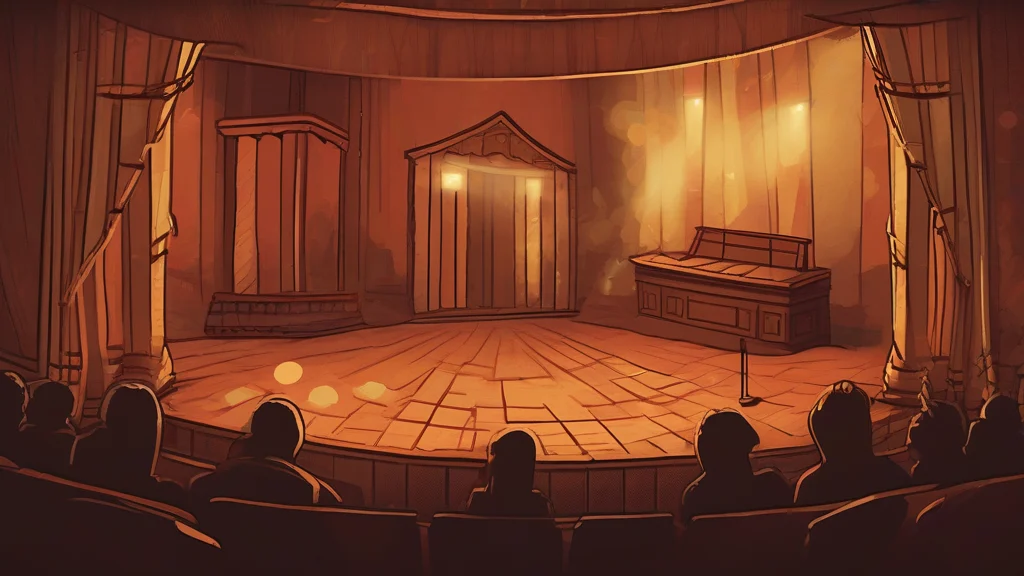
What does stagecraft mean?
Stagecraft is the collective term for the technical and artistic skills involved in putting a theatrical production onstage. It includes the design and operation of scenery, lighting, sound, props, costumes, and staging, as well as the way performers move and interact within the space. In criticism, the word often praises or assesses the effectiveness and originality of a production's presentation. The term can also refer broadly to the practical craft of coordinating these elements so that they support the play's meaning and audience experience. Stagecraft is especially useful when discussing theatre as more than written dialogue: it names the many visible and technical choices that shape how a story is experienced in performance.
nounThe technical and artistic skills involved in staging a theatrical performance, including the use of scenery, lighting, sound, props, movement, and performance style. It can also refer more broadly to the practical craft of putting a production together effectively.
- The technical and artistic skills used in staging theatrical performances.
- The overall practical craft of creating an effective stage production.
"The production's inventive stagecraft transformed a simple story into a vivid theatrical experience."
"The director's stagecraft made the empty stage feel like a vast, moonlit landscape."
"Students studying stagecraft learn how scenery, lighting, sound, and performance work together."
Usually an uncountable noun; “stagecrafts” is not a standard plural in ordinary usage.
"The production demonstrates a sophisticated understanding of stagecraft."
Stagecraft turns the invisible decisions of theatre—where an actor stands, when a light changes, and how a sound arrives—into a language the audience can feel.
Reviewed by Deb Chak, Editor. AI-assisted content curated by RJS Tech Solutions LLP.
Etymology of stagecraft
“Stagecraft” is a compound of “stage” and “craft.” “Stage” entered English through French from a Latin word associated with standing or a position, while “craft” comes from Old English and refers to skilled manual or practical work. The compound developed in the context of theatre to denote the practical techniques and artistry involved in staging performances.
How stagecraft is actually used
Generally formal and specialist, though it is also used in wider cultural discussion to describe the visual and theatrical presentation of a production. It usually refers to the combined effect of design, technical practice, and performance rather than to one isolated element.
Easily confused with stagecraft
Stagecraft concerns the practical and artistic techniques used in theatre, while craftsmanship more generally refers to skill and quality in making or doing something.