
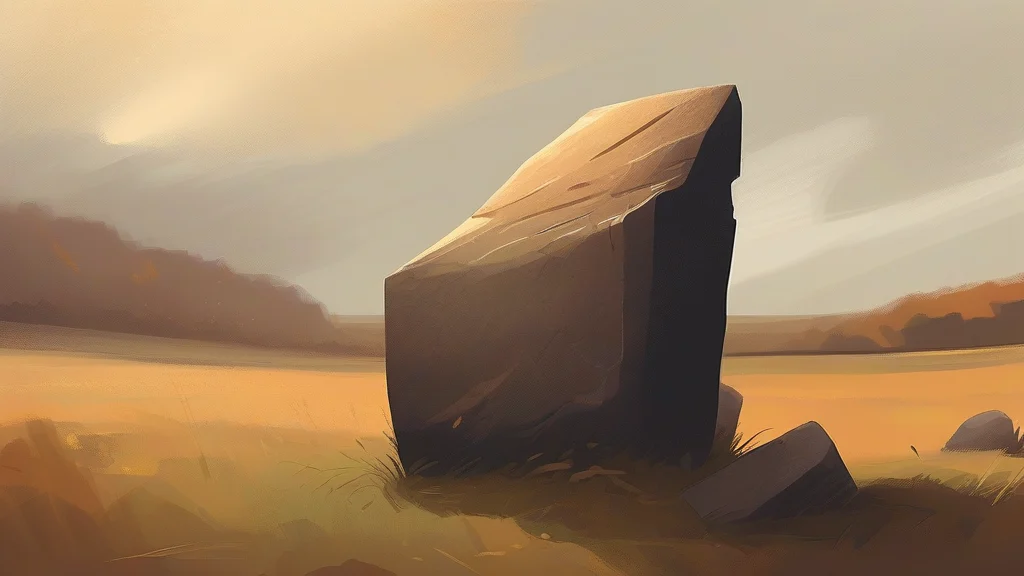
What does stane mean?
“Stane” is a Scots and northern English word for a stone. It can refer to a single piece of stone, a large stone or boulder, or collectively to stone used in construction. The word has a distinctly regional and historical character, appearing in Scottish writing, place names, and traditional expressions. In contemporary standard English, speakers usually use “stone,” but “stane” remains meaningful when it marks a Scottish or northern English setting or preserves an older vocabulary. Its pronunciation is /steɪn/, and its plural is normally “stanes.” The word ultimately belongs to the same ancient Germanic family as English “stone” and German “stein.”
nounA stone, especially a single stone or a stone used in building. In modern standard English, the usual word is “stone.”
- A stone or piece of stone.
- Stone used as a building material, especially in the plural.
"The old wall was built from rough stanes gathered from the riverbank."
"A single stane marked the old boundary."
"The shepherd's cottage was made of dark stanes from the nearby hill."
The usual plural in Scots and northern English usage; in standard modern English, “stones” is more common.
"The workers carried heavy stanes from the quarry."
Stane is the Scots and northern English cousin of the ordinary English word “stone,” preserving the old sound of the language.
Reviewed by Deb Chak, Editor. AI-assisted content curated by RJS Tech Solutions LLP.
Where does stane come from?
The modern word descends from Old English “stān,” meaning “stone.” It developed in Scots and northern English as the form “stane,” while standard English retained or developed the form “stone.” Related forms include German “stein” and the poetic English form “stan,” all reflecting the Germanic root for stone.
How stane is actually used
“Stane” is chiefly Scottish and northern English dialectal or archaic. In standard modern English, “stone” is the normal term. The word often appears in literary, historical, or place-name contexts.
Easily confused with stane
A “stane” is a stone, especially in Scots and northern English, whereas a “stain” is a mark, discoloration, or blemish.