
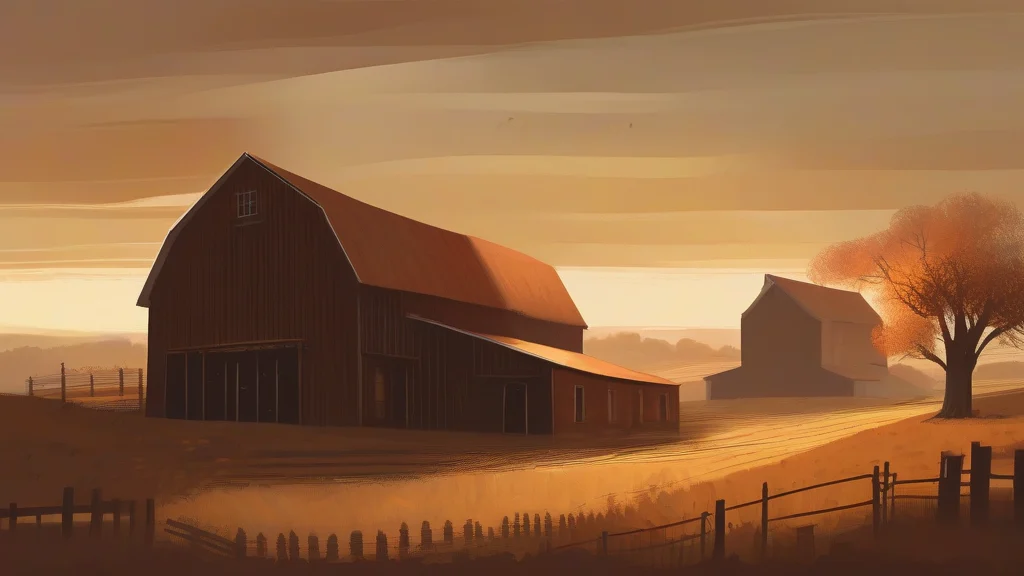
What does steading mean?
Steading is a chiefly Scottish noun for a dwelling or place of abode, especially a farm or farmhouse. It often suggests a working rural property and can carry a traditional, rooted atmosphere associated with family and land. The term occurs in older writing and remains familiar in Scottish English, but elsewhere it may sound regional, literary, or archaic. In modern usage, “steading” is countable, and its standard plural is “steadings.” The word is related to “stead” and to derivatives such as “steady” and “steadfast,” although “steading” does not mean the act of becoming steady. Within a Scottish or historical setting, the noun provides useful texture: a remote agricultural steading can evoke both the buildings and the livelihood organized around them, while a converted steading may retain the character of an old farm even when adapted to a new purpose. Its survival in regional use makes it a revealing example of how vocabulary preserves a distinctly rural social world.
nounChiefly Scottish: a place of abode, especially a farm or farmstead.
- Chiefly Scottish: a dwelling or place of abode.
- Especially in Scottish usage: a farm, farmhouse, or agricultural property.
"The old steading was carefully restored and converted into a home for the artist's family."
"After the tenancy ended, the old steading was restored as a cluster of holiday cottages."
"Her grandparents' steading stood beside a sheltered bend of the river."
A countable noun with the standard plural “steadings,” though the word itself is uncommon outside Scottish usage.
"Their steadings are scattered across the glen."
In a word that sounds like it describes an action, “steading” is actually a place: the old Scottish word for somewhere to make your home.
Reviewed by Deb Chak, Editor. AI-assisted content curated by RJS Tech Solutions LLP.
Where does steading come from?
Steading is generally analyzed as stead plus the noun-forming suffix -ing. Stead comes through Middle English from Old English stēde, meaning a place, seat, or position, and acquired the senses of a dwelling and a farm in Scots and northern English usage. The compound became established in Scottish English for a place of abode, particularly an agricultural property.
How steading is actually used
The term is chiefly Scottish and uncommon in general British English. Outside Scotland, it may sound regional, literary, or archaic and often suggests a traditional rural property.