
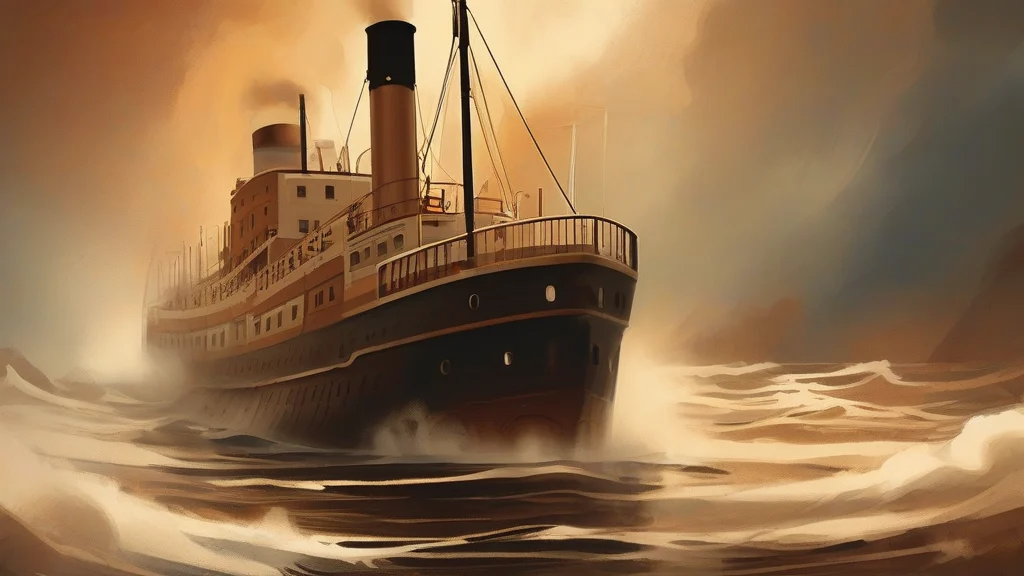
What does steamship mean?
A steamship is a vessel propelled by steam engines, a technology that transformed maritime travel during the 19th and early 20th centuries. Unlike sailing ships, steamships could maintain a regular schedule and travel against the wind, making long-distance passenger journeys and freight transport more dependable. The term now has a strongly historical character: it often evokes steam-powered liners, transatlantic crossings, and the period before diesel engines and modern propulsion became standard. Although a steamboat is also powered by steam, “steamship” usually refers to a larger vessel capable of longer, often ocean-going voyages. Today, the word appears chiefly in maritime history, historical fiction, museum interpretation, and traditional descriptions of shipping.
nounA ship propelled by steam engines, rather than by sails or an internal-combustion engine. Historically, steamships were the principal means of long-distance passenger and cargo travel before diesel and electric propulsion became widespread.
- A ship powered by a steam engine.
"The steamship crossed the harbour before dawn, its engines carrying it steadily through the mist."
"Passengers waited on the quay for the steamship to dock."
"The museum preserves the logbook of an early steamship that carried mail across the Atlantic."
The regular plural is used for steam-powered vessels in general and for individual vessels discussed as a class.
"The museum displays photographs of famous steamships and their passengers."
Before jets and ocean liners, the steamship made regular voyages across the world and connected continents faster and more reliably than sailing ships.
Reviewed by Deb Chak, Editor. AI-assisted content curated by RJS Tech Solutions LLP.
Etymology of steamship
“Steamship” was formed in the early 19th century by combining “steam,” from the Old English word for water vapour or heated vapour, with “ship.” The compound reflects the new use of steam-powered engines to propel vessels. Related terms include “steamboat” and “steamer,” while older technologies such as sailing ships eventually gave way to diesel- and electrically powered vessels.
Related word forms
How steamship is actually used
The term is largely historical or literary in modern English, though it remains common in maritime history, museum displays, and descriptions of earlier-era travel. It is not generally used for modern diesel- or nuclear-powered ships.
Easily confused with steamship
Both are steam-powered vessels, but “steamship” generally refers to a larger ship intended for long-distance or ocean travel, whereas “steamboat” traditionally denotes a smaller vessel used on rivers and coastal routes.