
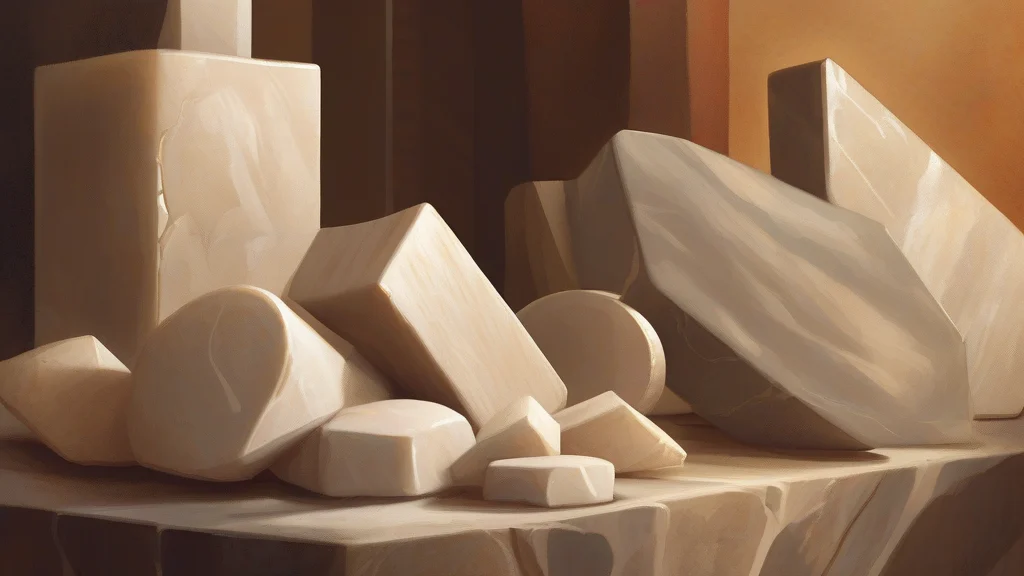
What does steatite mean?
Steatite is a mineral name for a particularly soft, greasy variety of talc. Its surface feels unctuous, and older English sources often connect it with soapstone. The word comes from Greek stear, meaning fat, a reference to that soapy texture. Because steatite can be worked easily and has been valued for its pale, opaque appearance, it has also been used for carved bowls, figurines, tablets, and other small objects. In mineralogical and archaeological writing, steatite is a technical mass noun used for the material and carved objects made from it. When individual specimens are discussed, the plural steatites may be used. The term is uncommon in everyday speech but useful when discussing carving stone, soapstone artifacts, or the physical properties of talc. Its combination of softness, a distinctive feel, and a long history of decorative carving makes it more than just another mineral name.
nounA soft, greasy-feeling mineral variety of talc, often used for carving or traditionally associated with the name soapstone.
- A soft, unctuous mineral variety of talc, commonly carved into vessels, figurines, tablets, and other decorative objects.
"The lapidary carved a small figure from the pale steatite."
"The lapidary carved a small figure from the pale steatite."
"Archaeologists identified several steatite tablets recovered from the settlement."
Usually uncountable when referring to the material; the plural is used for individual objects or specimens.
"The collection included steatites and other small carved objects."
Its name comes from Greek for “fat”: steatite feels distinctly greasy and soapy to the touch.
Reviewed by Deb Chak, Editor. AI-assisted content curated by RJS Tech Solutions LLP.
Where does steatite come from?
The English name steatite comes from Greek stear, “fat,” together with the mineral-forming suffix -ite. The fat-derived sense reflects the mineral's characteristic greasy or soapy feel. The same Greek root appears in technical words such as steatitis, steatosis, and steatopygia.
How steatite is actually used
This is a specialized mineralogical and archaeological term, rarely used in everyday speech. It is normally a mass noun when referring to the material.
Easily confused with steatite
Soapstone is a general trade name for soft, talc-rich stone, whereas steatite more specifically denotes the mineral variety of talc.