
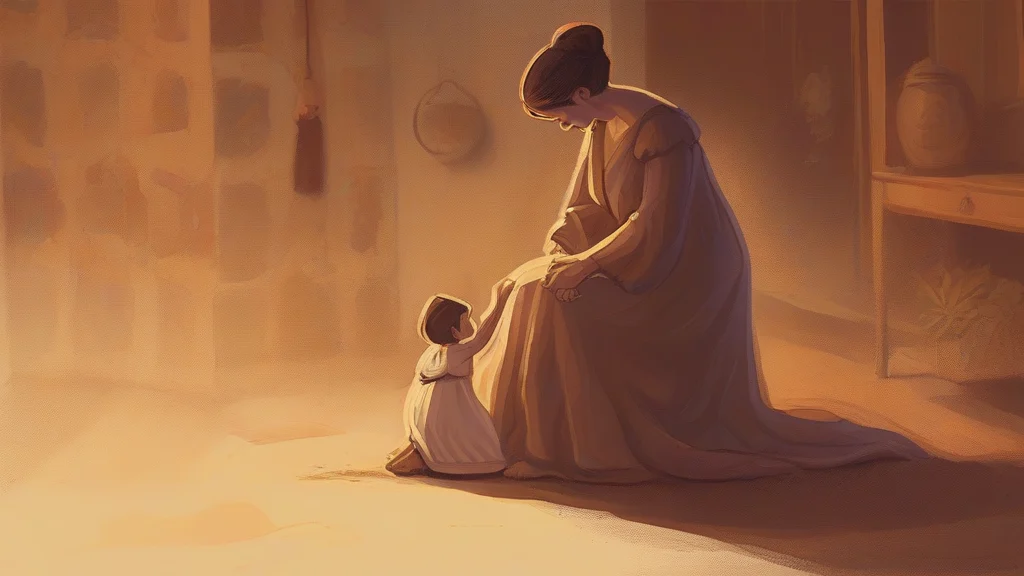
What does stepmother mean?
Stepmother is a common noun denoting a woman who is married to one's parent but is not one's biological mother. The relationship most often arises when a father remarries, although the term can also describe the wife of a mother in a same-sex marriage. In neutral contexts, it simply identifies a family relationship without implying conflict or unkindness. Its strongest additional connotation comes from fairy tales and other stories, where stepmothers are frequently portrayed as jealous, cruel, deceptive, or domineering. Consequently, literature may use the word figuratively to describe an unkind female antagonist, while ordinary conversation usually uses it literally. The informal contraction "stepmom" is widespread and often warmer in tone. Stepmother should not be confused with mother-in-law: the former is married to one's parent, while the latter is the mother of one's spouse. The word is also sometimes used attributively, as in "stepmother duties" or "a stepmother-in-law."
nounA woman who is married to one's parent but is not one's biological mother. The word can also be used figuratively for an unkind or domineering woman, especially in fairy tales.
- A woman who is married to one's parent but is not one's biological mother.
- A figurative term for an unkind, cruel, or domineering woman, especially in fairy tales.
"Her stepmother joined the family for dinner, and she soon felt like one of them."
"After her father remarried, her stepmother became an important part of the household."
"The story portrayed the queen as the princess's wicked stepmother."
The plural is used when referring to more than one woman occupying this family relationship.
"Her two stepmothers both attended the celebration."
In fairy tales, the stepmother is often a villain; in everyday family life, the word simply names a relationship.
Reviewed by Deb Chak, Editor. AI-assisted content curated by RJS Tech Solutions LLP.
Where does stepmother come from?
Stepmother is a Germanic compound formed from an element denoting a step relationship and the word "mother." It has close cognates in German Stiefmutter and Dutch stiefmoeder, which preserve the same compound structure. The English form developed through Middle English and eventually became established in its familiar modern spelling.
Related word forms
How stepmother is actually used
Generally neutral in modern British and American English, though it frequently evokes the jealous or cruel stepmother of fairy tales. The informal form "stepmom" is especially common in speech.
Easily confused with stepmother
A stepmother is married to one's parent, whereas a mother-in-law is the mother of one's spouse.