
What does stoniest mean?
Stoniest is the superlative form of stony, an adjective meaning full of stones or resembling stone. In its literal sense, it identifies the most rocky or stone-covered option, as in a stoniest path or the stoniest ground. The word can also be used figuratively for people, expressions, attitudes, or situations that seem exceptionally hard, cold, unyielding, or resistant to persuasion. For example, a stoniest expression suggests a particularly severe or impassive look. Stoniest is more typical of literary, descriptive, or deliberately emphatic writing than of casual conversation, but it remains standard modern English. Its usefulness lies in its ability to turn the idea of stony quality into a clear comparison: when someone says one route is the stoniest, it identifies that route as the most difficult to travel, the most obstructive, or the most forbidding.
adjectiveStoniest is the superlative of stony, meaning more full of or covered with stones; by extension, it can describe something as harder to move, persuade, or emotionally affect.
- Most full of stones or covered with stones.
- Figuratively, hardest to move, persuade, or emotionally affect.
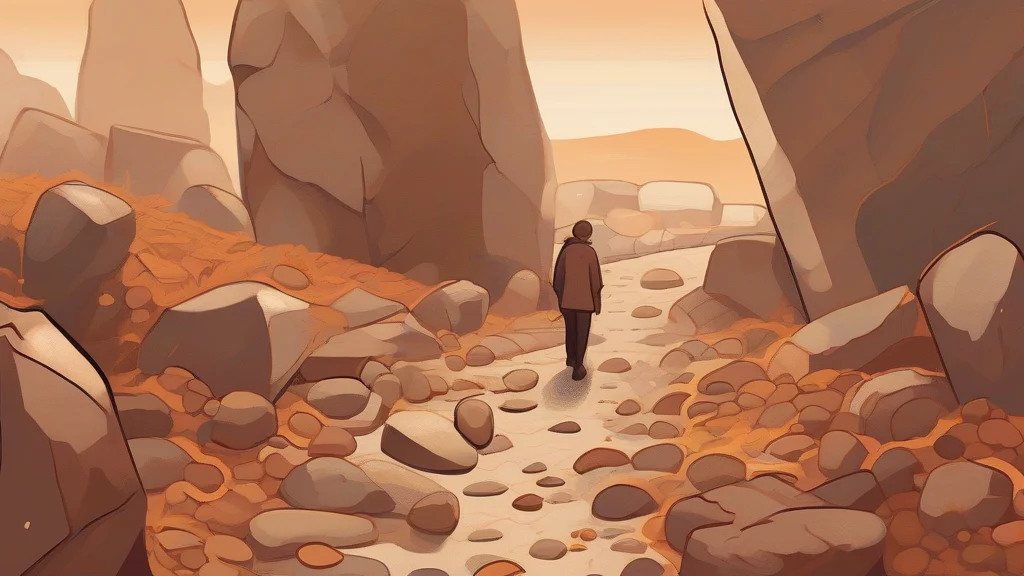
"The stoniest stretch of the old road lay beyond the ruined wall."
"The stoniest stretch of the old road lay beyond the ruined wall."
"Her stoniest expression silenced the room."
“Stoniest” is the extreme of stony: it can describe both a literal landscape and a figurative emotional wall.
Reviewed by Deb Chak, Editor. AI-assisted content curated by RJS Tech Solutions LLP.
Where does stoniest come from?
Stoniest was formed by adding the English superlative suffix -est to stony. Stony derives from stone, which comes from Old English stān, a Germanic word related to cognates such as German Stein, Dutch steen, and Old Norse steinn. The comparison follows the ordinary English pattern in which adjectives ending in -y form comparatives with -ier and superlatives with -iest.
Related word forms
How stoniest is actually used
Literally, it describes terrain or material containing or covered with stones. Figuratively, it can characterize a person, attitude, or situation as hard, resistant, or unyielding. It is uncommon in ordinary speech but standard in literary and descriptive writing.
Easily confused with stoniest
Stony is the base adjective, while stoniest is its superlative form, as in “the stoniest path.”