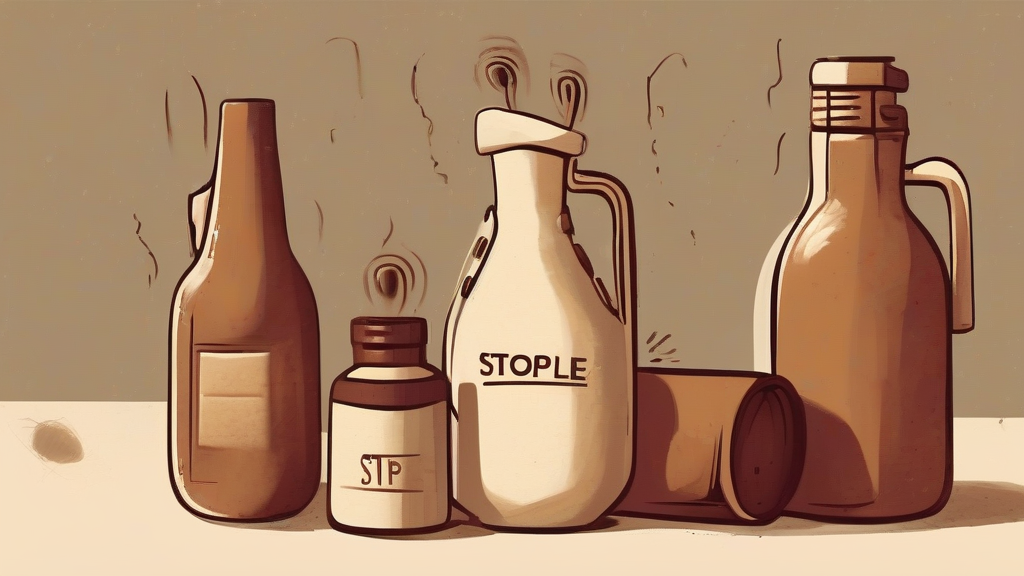
What does stopple mean?
A stopple is a device used to seal or close a container, typically made of a soft, flexible material. As a noun, it refers to the plug or cork itself, while as a verb, it describes the act of plugging or corking something. The term is commonly used in formal or technical contexts, such as in the wine industry or in laboratory settings, where precise sealing is crucial. The use of stopples helps to preserve the contents of a container, prevent leakage, and maintain a sterile environment. Understanding the concept of stopples is essential in various fields, including winemaking, chemistry, and food processing.
A plug or cork used to seal a container
"The stopple was made of a soft, flexible material."
To plug or cork something
"He stoppled the bottle tightly to preserve the wine."
The plural form 'stopples' is used when referring to multiple plugs or corks.
"The laboratory ordered several dozen stopples for their equipment."
Reviewed by Deb Chak, Editor. AI-assisted content curated by RJS Tech Solutions LLP.
Etymology of stopple
The word 'stopple' originated from the Middle English word 'stopelen', which means 'to cork or plug'. It is related to the Old French word 'estopel', meaning 'a plug or cork'. The term has been used in the English language since the 14th century, initially referring to a cork or plug used to seal a container.
How stopple is actually used
The term 'stopple' is often used in formal or technical contexts, such as in the wine industry or in laboratory settings.