
What does stork mean?
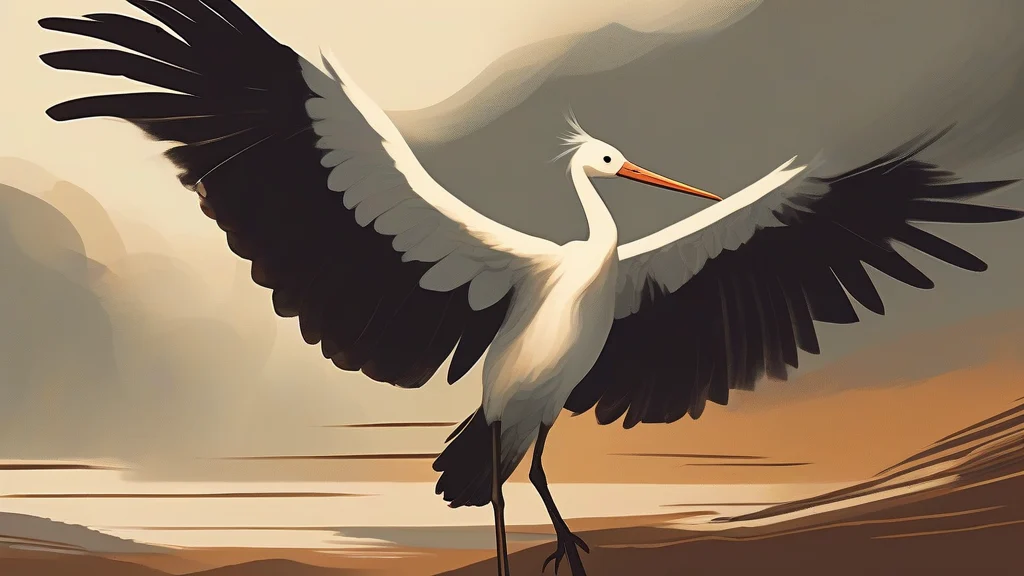
A stork is a large wading bird with exceptionally long legs, a long neck, and a straight, pointed bill. The best-known species is the white stork, although the group also includes black storks and several species with different combinations of black, white, and reddish coloring. Storks are commonly seen in wetlands, farmland, and open grassland, where they hunt fish, insects, frogs, and other small animals. In ordinary English, the word usually refers to the bird rather than to a particular species. Storks are especially prominent in European culture because of the traditional belief that they deliver babies to expectant parents, giving the bird associations with childbirth, luck, and family. The word is also used in wildlife descriptions and discussions of migration, nesting, and wetland conservation.
nounA large, long-legged wading bird with a long neck and bill, typically white or black and white. Storks inhabit many warm regions and include well-known species such as the white stork and black stork.
- Any of various large wading birds of the family Ciconiidae, characterized by long legs, necks, and bills.
"A white stork stood motionless in the shallow water, its long bill probing for fish."
"The stork returned to its nest as the evening winds gathered over the marsh."
"In European folklore, a stork delivering a baby was a symbol of good fortune and family happiness."
The standard plural is storks; the singular form stork is used for one bird.
"Several storks nested on the roofs of the old town."
Storks have long been associated with bringing babies, a folklore tradition that made the bird a symbol of arrival and family.
Reviewed by Deb Chak, Editor. AI-assisted content curated by RJS Tech Solutions LLP.
Where does stork come from?
The English word stork comes from Old English stork, used for the bird in medieval English. It belongs to a Germanic word family, with cognates including German Storch, Dutch stork, and Old Norse storkr. Across these languages, the word refers to the same kind of long-legged wading bird, and its modern form reflects the long-standing Germanic name.
How stork is actually used
Usually used in a broadly neutral or natural-history context. In some European folklore, storks are associated with bringing babies.
Easily confused with stork
Both are long-legged wading birds, but cranes generally have shorter bills and a different, often more upright silhouette; storks typically have exceptionally long necks and bills.