
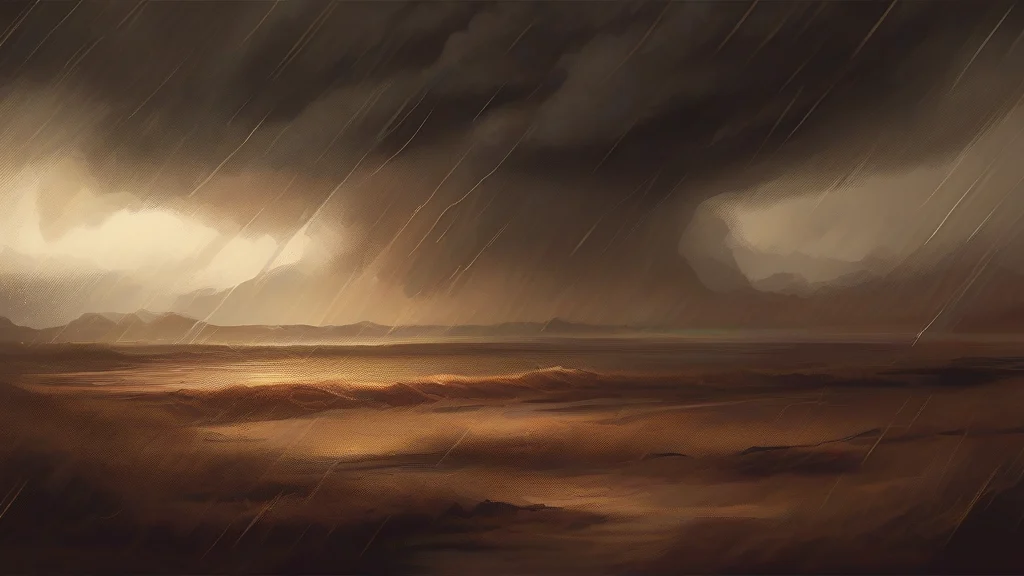
What does stormiest mean?
Stormiest is the superlative form of the adjective stormy. It means having the greatest intensity of wind, rain, or turbulent weather: “The stormiest night of the season.” In figurative use, it can describe the most dramatic, agitated, or chaotic period in a series of events or experiences. For example, a journey might become the stormiest part of a difficult year. Although the word is closely associated with severe weather, it is not limited to literal storms and may suggest emotional upheaval or repeated disruption. It is especially useful when comparing several occurrences or periods and identifying the one with the greatest severity or turbulence.
adjectiveThe superlative of stormy: having the greatest intensity of wind, rain, or other severe weather; most turbulent or tempestuous.
- Having the most severe or turbulent weather.
- By extension, being the most emotionally agitated, dramatic, or difficult.
"The stormiest night of the season brought down trees and flooded several roads."
"The stormiest afternoon of the year brought hail, flooding, and repeated lightning."
"The journey through the mountains proved to be the stormiest part of the expedition."
When the forecast calls for the stormiest weather of the year, even a calm-looking cloud can conceal a dramatic change.
Reviewed by Deb Chak, Editor. AI-assisted content curated by RJS Tech Solutions LLP.
Etymology of stormiest
The word is formed from stormy, which in turn combines the Old English noun storm with the suffix -y. The form stormiest adds the superlative ending -est. The English noun storm comes through Middle English from Old Norse stormr, meaning a disturbance of the weather.
Related word forms
How stormiest is actually used
Most often used for weather or seas, but it can figuratively describe a particularly turbulent situation or an agitated person. It is standard in both British and American English.