
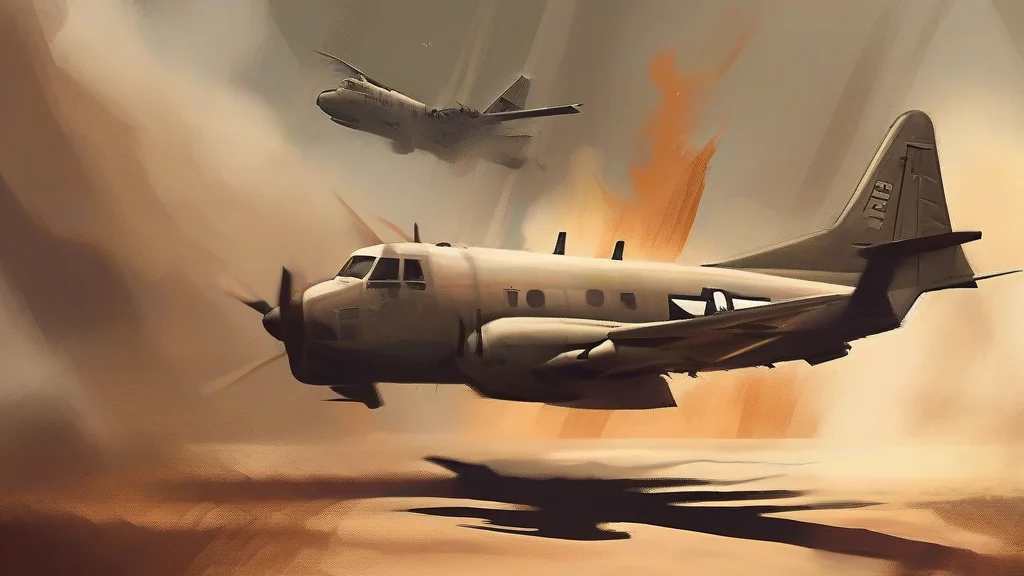
What does strafing mean?
Strafing means attacking a target with gunfire, most commonly from an aircraft flying low enough to direct its weapons accurately against ground positions. The word can also describe a rapid direct-fire attack from a tank, vehicle, or other military unit. It evokes an intense attack in which concentrated fire is swept across a target area rather than directed at one precise point. The term is chiefly found in military reporting, historical accounts of aerial combat, and discussion of video games or combat simulation. “Strafing run” refers to the low pass made by an attacking aircraft while delivering such fire. In contemporary usage, “strafing” can sometimes describe rapid gunfire directed at people or vehicles from the air. The word comes from a German military borrowing and retains a distinctly technical association with armed conflict.
verbTo attack ground targets with gunfire fired from an aircraft, especially while flying low or passing over the target. It can also refer to a low, fast attack by a ground unit using direct fire.
- To fire at ground targets from an aircraft, especially during a low-level pass.
- To attack a target with a sustained burst of direct fire from a ground position.
"The fighter returned to strafe the position before climbing away to safety."
"The pilot strafed the runway to disable the abandoned aircraft."
"Artillery observers reported that the convoy was being strafed by an unseen attacker."
Strafing turns the aircraft itself into a weapon, directing a rapid stream of fire onto a target from close range.
Reviewed by Deb Chak, Editor. AI-assisted content curated by RJS Tech Solutions LLP.
Where does strafing come from?
English borrowed “strafing” from German “strafen,” a word that originally meant to punish or fine. German developed the military sense of firing upon or attacking a target, and English adopted the term during the early 20th century. The English verb “strafe” preserves the same root and sense, while the form “strafing” is its present participle.
Related word forms
How strafing is actually used
Primarily a military term. The verb form is usually “strafed” in the past tense and “strafing” in the present participle. In the second sense, the agent may be a vehicle, gun position, or other direct-fire system rather than an aircraft.