
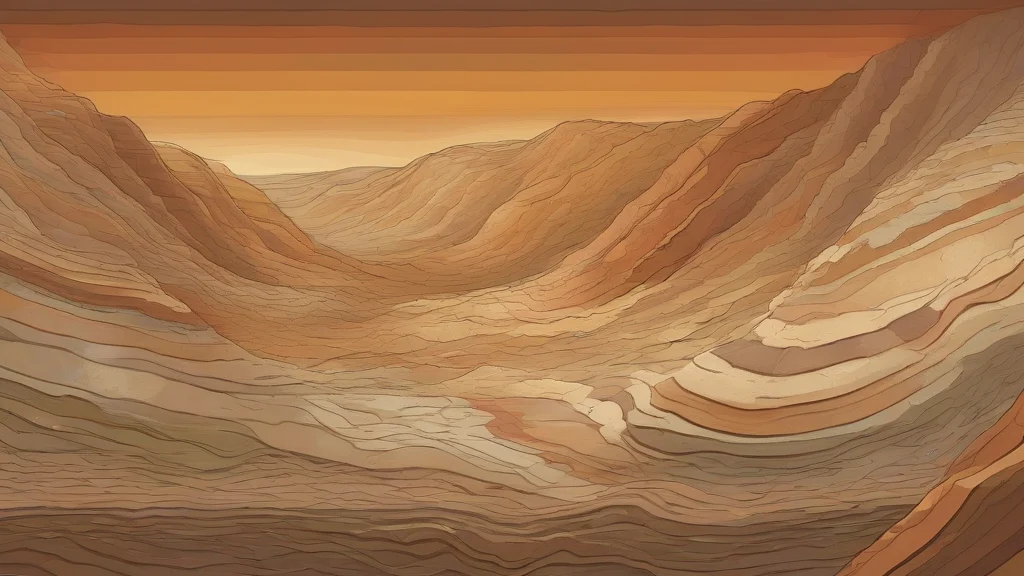
What does stratigraphic mean?
Stratigraphic is an adjective meaning “relating to strata,” the layers of rock, sediment, or other material formed at different times. It is used in geology, archaeology, and related disciplines to describe the study, sequence, correlation, and relative dating of layered deposits. A stratigraphic analysis compares layers in different locations to determine their age and relationships, while terms such as stratigraphic sequence and stratigraphic unit identify arrangements of beds or formally recognized rock layers. The word is primarily associated with stratigraphy, the branch of geology concerned with layered formations and their historical order. Although the concept is ancient, the modern technical vocabulary developed during the nineteenth century as geologists established systematic methods for recording and correlating rock strata. In archaeology, the word can also describe deposits whose arrangement provides evidence about human activity and environmental change. Because it belongs to specialist scientific language, stratigraphic normally appears in formal, technical, or academic contexts rather than informal speech.
adjectiveRelating to the study, arrangement, or sequence of rock or sediment layers. It may also refer to the relative age and position of those layers within a geological sequence.
- Relating to strata, their sequence, or the study and correlation of stratified rock formations.
"The researchers used stratigraphic analysis to reconstruct the area's changing environment over thousands of years."
"Detailed stratigraphic analysis helped the team assign the fossil-bearing layers to their correct geological period."
"The stratigraphic correspondence between rocks on two continents supports the theory that they were once joined."
A single layer can be a clue to an entire chapter of Earth's history: stratigraphy turns stacked rocks into a timeline.
Reviewed by Deb Chak, Editor. AI-assisted content curated by RJS Tech Solutions LLP.
Where does stratigraphic come from?
Stratigraphic was formed in nineteenth-century English from stratigraphy and the adjective-forming suffix -ic. Stratigraphy comes through Latin stratum, meaning “layer” or “bed,” from a form related to sternere, “to spread out” or “lay down.” The same Latin foundation appears in cognates such as stratum, stratify, and stratification.
Related word forms
How stratigraphic is actually used
This is a specialist term used chiefly in geology, archaeology, paleontology, and related fields. It is formal and technical rather than everyday vocabulary.
Easily confused with stratigraphic
Stratigraphic is an adjective describing something connected with the arrangement or study of strata, whereas stratigraphy is the noun naming that study.